

Blog
Training at home and in the garden – 6 stick and ball drills

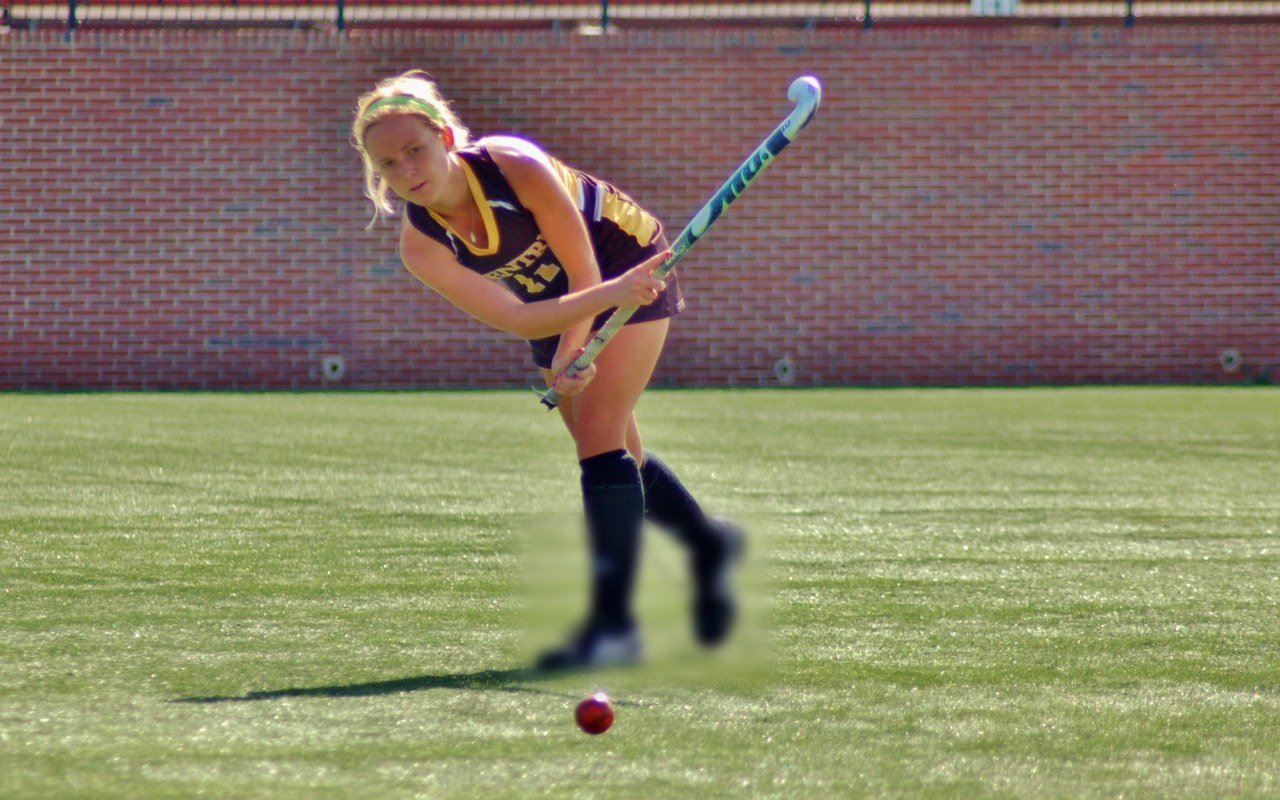
With two club sessions a week, you do not get many touches on the ball. Feel for the ball is built through repetition, and you can collect those repetitions on the lawn, the patio or in the garage, a quarter of an hour a day. Below are six drills that need only a stick, a ball, two bottles and a bit of free space. They run from the easiest to the hardest.
Before you start: space and safety
- Practice surface – a closely mown lawn, a piece of artificial grass or a smooth mat is best. Indoors, carpet works well. Tarmac, concrete and paving wear down the head of the stick, so use an old stick on hard ground. More on this in our post how to care for your stick.
- Free space – for ball control, a rectangle of roughly two by three metres is enough; for pushes towards a target and receiving the ball from a wall, you need a clear line of three to five metres. In both cases, keep away from windows, cars and younger siblings.
- Scope of practice – at home and in the garden, practise dribbling, receiving and pushing. Leave hits with a backswing for the pitch.
- Type of ball – outdoors, an ordinary hockey ball. Indoors a lighter training ball or a tennis ball is better, as it reduces the risk of damage to the floor.
- Leg protection – wear shin guards for drills in which the ball rebounds off a wall.
1. Indian dribble on the spot
Stand with your feet slightly apart, knees bent, the ball half a metre in front of your feet. Move the ball from right to left and back again, each time turning the stick over the ball so that the flat side of the head touches it. The left hand, holding the top of the handle, turns the stick. The right hand holds loosely and only guides, and the stick rotates inside it. Start with three sets of 30 seconds. Once the rhythm is even, take your eyes off the ball and look ahead, then do the same while walking.
2. Figure of eight between two bottles
Place two bottles a metre and a half apart. Dribble the ball along a figure-of-eight path, keeping it close to the head of the stick all the time. On each loop the side on which you pass the bottle changes, so the forehand and the reverse take turns. Do five full figures of eight, rest, and repeat in the opposite direction. To make it harder, reduce the gap between the bottles to one metre.
3. Pull back and change of direction
In clubs this move is often called the V. Push the ball slightly forwards to the right, stop it, pull it back towards you with the flat side of the stick and immediately push it forwards to the left. The path of the ball draws a letter V on the ground, and your feet shift your body weight in the new direction. Do ten repetitions each way. Make sure the ball does not bounce away from the stick as you pull it back; if it does, slow down.
4. Push to a target
Lay a crate or a board on its side about five metres away. Stand side-on to the target, left shoulder pointing towards it. The head of the stick rests next to the ball, with no backswing. Transfer your weight from the back foot to the front foot and push the ball along the ground, finishing with the stick pointing at the target. Count how many of twenty pushes hit it. When your score goes above fifteen, make the target smaller or move back a metre.
5. Wall pass and receive
You need a flat wall, a low wall or a board set at a right angle to the ground. Stand three to four metres away, pass with a push and receive the ball as it comes back along the ground. When receiving, the stick is tilted slightly over the ball and your hands give with it to take the pace off. Receive on the forehand for a minute, on the reverse for the next, then alternate. This drill is noisy, so choose a time of day when it will not disturb the neighbours.
6. Ball on the stick
To finish, a game that teaches soft hands. First balance the ball motionless on the flat side of the head and count to ten. Then bounce it low, to knee height, and count the bounces. Three attempts: write down your best score and try to beat it the next day. Practise well away from other people, and do not bounce the ball above hip height.
A suggested plan for the week
| Day of the week | Drill numbers | Session length |
|---|---|---|
| Monday | 1, 2 and 6 | 15 minutes |
| Wednesday | 1, 3 and 4 | 15–20 minutes |
| Friday | 2, 4 and 5 | 15–20 minutes |
| Weekend | all of them in order, each one briefly | 20 minutes |
This is a suggestion, not a standard. Fit the days around club training and school. Short, regular sessions are easier to keep up than one long one, and technique is consolidated through repetition. Before you start, do a few minutes of loosening up: arm circles, lunges and forward bends with the stick. You will find the full routine in our post warm-up before training and matches.
The most common mistakes
- Eyes on the ball the whole time. Once you have the movement, glance ahead every few touches.
- Straight legs and a bent back. Lower your hips and bend your knees so that you do not hunch your back.
- A clenched right hand. If the stick does not turn freely, loosen the grip of your right hand.
- Working only on the forehand. In every drill, plan the same number of repetitions on the reverse.
- A stick that is too long. If the head keeps catching the ground far from your feet, check the length using our post how to choose stick length.
What comes in handy
Use the same stick you play with at the club, so that your hands learn one length and one weight. Add three or four balls, because after every missed reception it is a waste of time to run after a single one. Water bottles will do as markers, and you can make a target for pushes out of a crate. You will find balls in our category Balls, and sticks for children and adults in our category Hockey Sticks.
Photo: fh.mum1, CC BY 2.0 licence, Wikimedia Commons; cropped and retouched.