


Blog
Warming up before field hockey training and matches – a 15-minute routine

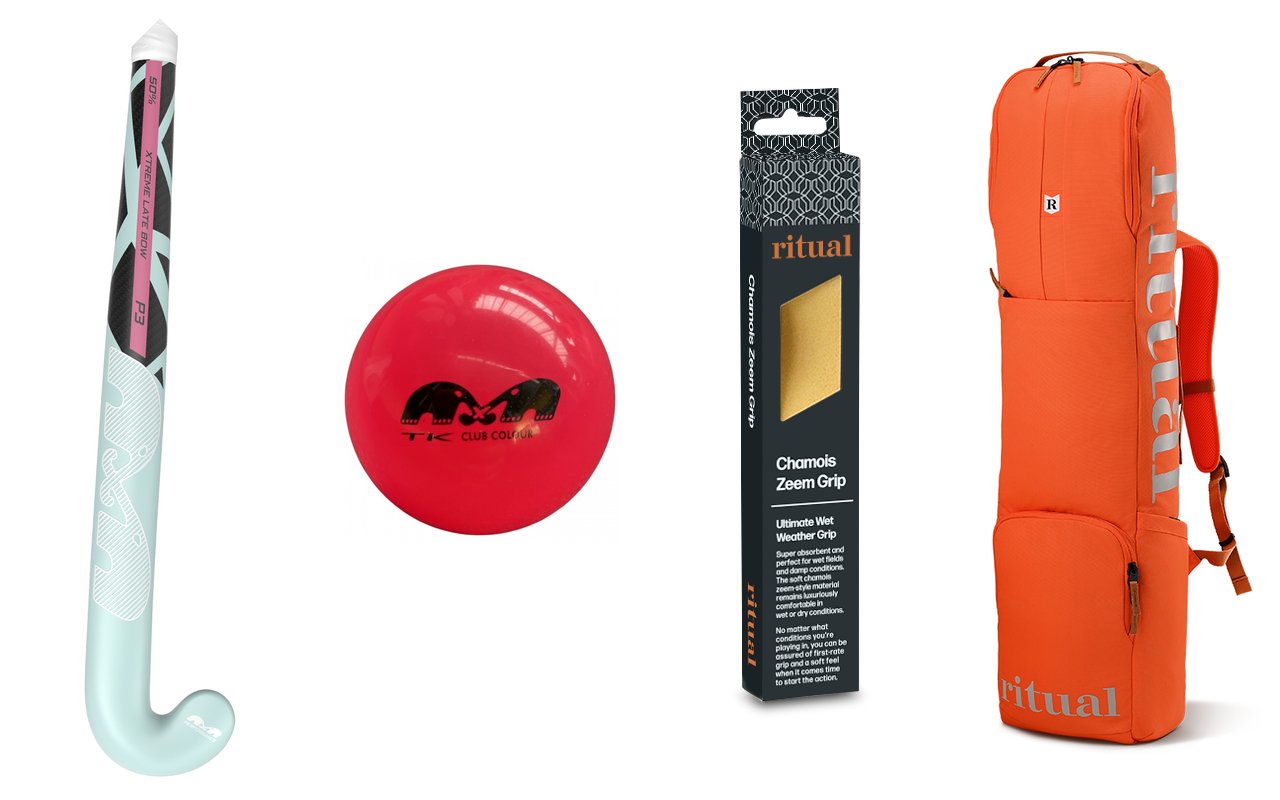
In many teams the warm-up looks the same: two laps of the pitch, a few toe touches and straight into the game. Yet field hockey means sprints, sharp changes of direction and playing in a low position – the body needs a few minutes to get ready for that. Below is a simple 15-minute routine before training, a 20–25-minute match version and a list of things worth having in your bag.
Where this routine comes from
Modern sports warm-ups are built around the RAMP sequence: raise the temperature (Raise), activate the muscles (Activate), mobilise the joints (Mobilise) and finally prime the nervous system for fast work (Potentiate). This principle underpins, among others, the Hockey Ready programme developed for Scottish Hockey at Edinburgh Napier University – its authors write cautiously that such a warm-up may reduce the frequency and severity of injuries, and does not impair performance. We promise no more than that: a warm-up gives no guarantees, but it prepares the body for what it is about to do.
The routine below is a short adaptation of the RAMP principles written by us, not the official Hockey Ready plan. Adjust the time and intensity to age, temperature, level of play and the length of any break; after a longer wait, build the intensity back up gradually.
Four principles
- From gentle to intense – the heart rate rises gradually; sprints come at the end, not the beginning.
- Movement instead of standing still – before a game, dynamic movement is the priority; long static positions should not dominate the warm-up.
- Stick in hand from halfway through – hockey is played bent forward, so the hockey stance needs to be “switched on” before the first pass.
- The same routine every time – repetition means players do it themselves, without the coach having to supervise.
The 15-minute routine before training
| Minutes | Block | What we do |
|---|---|---|
| 0–3 | Raising the temperature | multidirectional jogging: forwards, backwards, side steps both ways, A-skips |
| 3–6 | Mobility | hip circles, lunges with trunk rotation, leg swings forwards and sideways, arm circles |
| 6–9 | Activation | squats, reverse lunges, glute bridges, calf raises, a 20-second plank |
| 9–12 | With stick and ball | dribbling at a jog, pushes in pairs, receiving on the forehand and backhand, slalom between cones |
| 12–15 | Priming | 3–4 sprints over 15–20 m with a change of direction, a few pushes or shots at goal at full speed |
In the three-minute mobility and activation blocks, pick 2–3 exercises each. Do them for 20–30 seconds or for 4–6 controlled repetitions per side; do not try to fit every variation into one warm-up. The point is not fatigue – after this part the player should be warm, not out of breath. The stick block is a good moment to check that the grip holds in your hands and that the ball does not “escape” from the head when receiving. With children, turn the same blocks into games: tag instead of jogging, “mirror” in pairs instead of leg swings, a slalom race with the ball instead of sprints – the order stays, only the form changes.
Match version: 20–25 minutes
Before a match the order of the blocks is the same, and more time goes to the stick block, which grows into small-group play: passing in triangles, 3 v 3 on a small area, a few attacks going into the circle. Players taking penalty corners practise their routines separately – the drag flick needs its own series of repetitions, as we wrote in the post on the drag flick. Finish the warm-up shortly before the first whistle; if the start is delayed, gradually raise the intensity again. At a tournament, where matches are an hour or two apart, repeat a shortened version of the routine before the next match, adjusted to the length of the break.
The goalkeeper warms up separately
The goalkeeper does the Raise, Mobilise and Activate parts with the team as far as the position allows, then moves on to progressive movements in full kit. The partner increases the pace gradually and directs balls into agreed, protected zones; full shots only once the goalkeeper has confirmed they are ready. We write about how to put a goalkeeper kit together in the post goalkeeping kit from scratch.
What to pack for the warm-up
- a few balls – one for every two people is enough for the stick block; you will find training and match balls in the category Balls,
- a spare grip and tape – if the stick block shows that the handle is slipping, you can replace it before training; see the range in the category Grips,
- 4–6 cones or markers for the slalom and sprints,
- a water bottle – drink during the warm-up, not only after it,
- shin guards and a mouthguard worn from the stick block onwards – a ball in the warm-up hurts just as much as in a match.
You will find full packing lists for training and tournaments in the post stick bag, and the whole range – sticks, protective gear, balls, grips and bags – in our shop. Do you run a hockey school and need balls or grips for a whole group? Write to [email protected] – we will prepare a club offer.