

Blog
How to read the names of Gryphon, Ritual and TK sticks

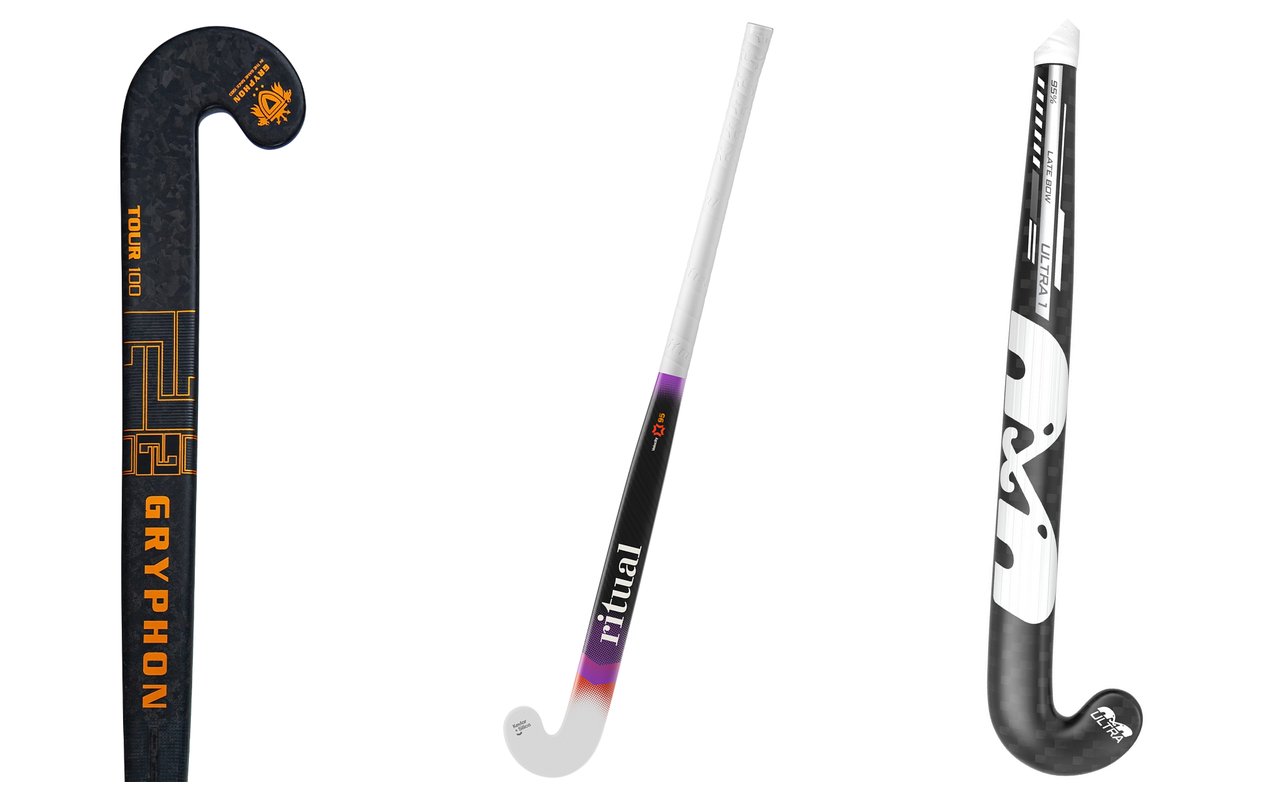
Tour Pro25 G26, Velocity 95, U1 Late Bow – stick names look like code, and each brand follows a different logic. Once you know it, the name alone tells you the level of the stick, the bow profile and the season. We break down the names used by three brands from our range: Gryphon, Ritual and TK. One rule to start with: compare numbers only within one manufacturer and one series – Ritual 75 and Gryphon CQ 75 do not mean the same thing.
The three parts of every name
Regardless of the brand, a stick name usually consists of three elements: the series or family (which tells you the level and materials), the bow profile (how high and where on the shaft the curve sits) and a suffix – a season code, an indoor or a junior variant. The FIH rules set two limits: a maximum bow depth of 25 mm and its position – the highest point of the curve may not be closer than 200 mm to the bottom end of the stick. Names such as low bow, late bow or Pro25 are manufacturers' conventions, so when comparing, look at two numbers: the bow height in millimetres and the distance of the maximum bow point from the head. We covered this in more detail in the post on the stick bow.
Gryphon: family + profile + season
The layout of the name depends on the variant, but it usually combines the stick family, the profile and the season code. In the G26 collection the levels by Carbon Quotient are as follows: Tour 100, Bluesteel 95, Striker 90, Diablo 75, Elan 70, Atomic 60, Solo 50 and Cobra 40. CQ is Gryphon's own index, not a carbon percentage – it only makes sense within this brand's range.
The second part of the name is the profil. Pro25 is a 25 mm bow with its maximum point 250 mm from the head – the manufacturer describes it as halfway between a mid bow and a low bow, for all-round play with a strong hit. DII (Deuce II) has the same 25 mm bow, but lower, around 205 mm from the head – a profile for drag flicks, lifts and 3D skills. Pro-J is the junior version of Pro25, produced in shorter lengths. The code G26 is the season: sticks from the 2026 collection. The suffix Indoor denotes the indoor version of the same model.
| Example | Family (level) | Profile | Season / variant |
|---|---|---|---|
| Tour Pro25 G26 | Tour – CQ 100 | Pro25 – 25 mm at 250 mm | 2026 |
| Bluesteel DII Indoor G26 | Bluesteel – CQ 95 | DII – 25 mm at 205 mm | 2026, indoor stick |
| Tour Pro-J G26 | Tour – CQ 100 | Pro25 in the junior version | 2026 |
| Solo DII G26 | Solo – CQ 50, below Atomic | DII | 2026 |
Ritual: series + number
At Ritual the first word defines the series, which above all indicates the profil. Velocity has a 24 mm bow with its maximum point 250 mm from the head (the manufacturer calls it a late bow) and is a series for ball control and 3D skills. Ultra takes the same bow down to 200 mm – the lowest profile the rules allow, for technical skills and lifts. Specialist is designed for the drag flick. Finesse is based on the Velocity concept but does not have identical geometry: the current Finesse 55 spec sheet gives a 24 mm bow with its maximum point at 260 mm and a thinner handle than Velocity. Response has its bow point higher, around 300 mm, for players with an upright stance. Precision is the indoor series.
The number after the series name matches the carbon content declared by the manufacturer: Velocity 95 is 95 % carbon, Ultra 75 – 75 %, Finesse 55 – 55 %. A lower number means a lower declared carbon content within that series and usually more flex; the junior variant is recognised by the Jr code and the lengths available. A separate tier is the suffix Revolution (e.g. Velocity Revolution) – the top version of a series, with Japanese carbon, made using RTM resin injection technology. The suffixes Indoor and Jr denote the indoor and junior variants.
| Example | Series (profile) | Number (carbon per manufacturer) | Variant |
|---|---|---|---|
| Velocity 95 | Velocity – 24 mm at 250 mm | 95 % | – |
| Ultra 75 | Ultra – 24 mm at 200 mm | 75 % | – |
| Finesse 55 | Finesse – 24 mm at 260 mm | 55 % | – |
| Precision Pro Indoor | Precision – indoor, wooden core | 50 % | indoor |
| Velocity Revolution | Velocity | top version, Japanese carbon | – |
TK: letter + number + profile
Letter and number
The letter P denotes the Performance line. Among the Performance models currently available at FHZ are P1–P6; the lower the number, the higher the model sits in this part of the range. Outside it, TK also offers other lines and models – including the U line (U1, U2), positioned above Performance. According to the manufacturer, P1 has 90 % carbon, P2 – 70 %, P3 – 50 %, P4 – 30 %, P5 – 20 % and P6 – 10 %; in the U line the U1 has 95 % carbon and the U2 – 80 %. A plus in the name (U1+) denotes a variant with an even higher specification. Junior and school sticks have separate names: F Jr, Maxi, School.
Profile
The same TK model comes in two or three profiles. Control Bow is the mildest of them – in the P1 the bow is 24 mm with its maximum point 235 mm from the head – and suits players who want one stick for everything. Late Bow moves the bow point lower, towards the head, which makes lifts and dribbling easier. Extreme Late Bow is TK's most aggressive profile, for drag flick and 3D specialists. The suffix Plus (Late Bow Plus) denotes an intermediate variant.
| Example | Line and number | Carbon per manufacturer | Profile |
|---|---|---|---|
| U1 Late Bow | U, top of the line | 95 % | Late Bow |
| P1 Control Bow | P, top of the line | 90 % | Control Bow – 24 mm at 235 mm |
| P3 Extreme Late Bow | P, middle of the line | 50 % | Extreme Late Bow |
| P5 Late Bow | P, club model | 20 % | Late Bow |
| F Jr Control Bow | junior stick | – | Control Bow |
How to use this when buying
- First choose the profil to suit your technique – it has the biggest influence on how the stick behaves when receiving, dribbling and shooting.
- Only then choose the series level to match your experience and budget. A stiff, high-carbon stick makes clean receiving harder for a beginner – more in the post on stick materials.
- Treat the carbon percentage or Carbon Quotient as a guide only within one series; between brands, compare the feel of the stick, its stiffness in play, weight and balance.
- Do not read the season code (e.g. G26) as a “better model” – it is the collection year, not the level.
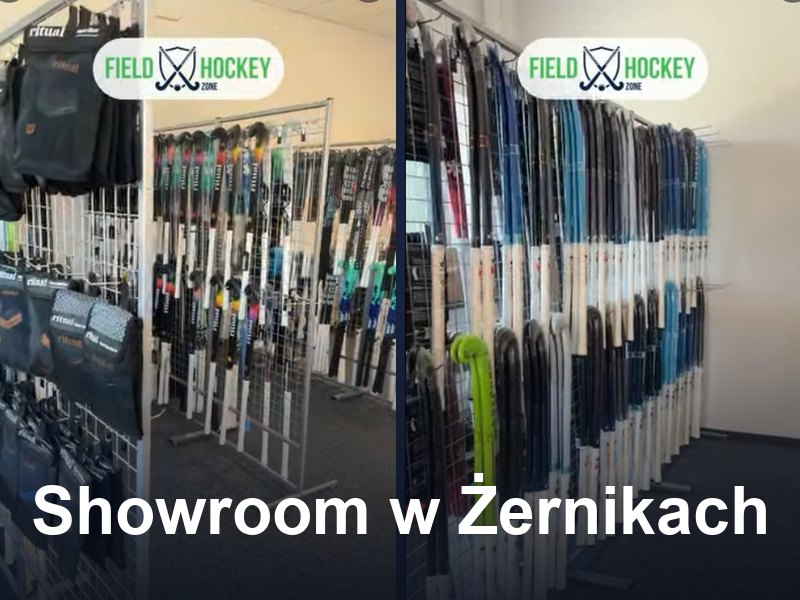
You will find sticks from all three brands – with the length and bow profile stated – in the category Hockey Sticks. If you would rather hold a stick in your hands, you are welcome to visit our showroom in Żerniki, which we wrote about in the post Field Hockey Zone showroom. Not sure which profile suits your game? Write to [email protected] – we will point you in the right direction.