

Blog
Shin guards and mouthguards – what is compulsory and what is sensible

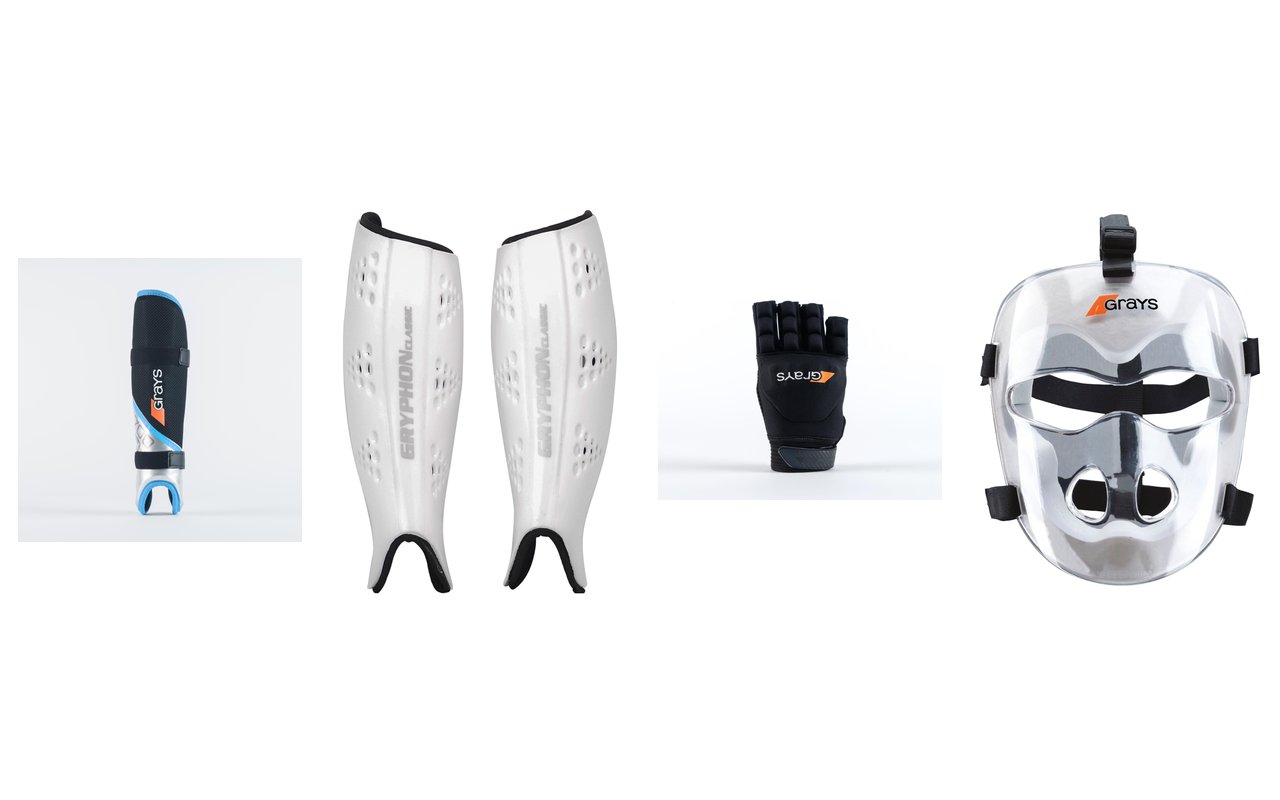
A field hockey ball weighs around 160 g and after a hit can travel faster than 100 km/h. The two cheapest items of equipment – shin guards and a mouthguard – protect the places that get hit most often. We explain what the rules recommend, where to check competition requirements, how to choose the size and type, and how conditions differ between outdoor and indoor play.
Compulsory or recommended? It depends on the regulations
FIH rule 4.2 (Rules of Hockey 2026) recommends that field players protect their shins, ankles and teeth; it does not make this compulsory. The same rule permits hand protection and recommends a face mask when defending penalty corners and penalty strokes. The regulations of individual PZHT competitions may introduce additional requirements depending on the season, age group and tournament. Before the start, check the document that applies to your competition on the current PZHT website. Rule 4.2 permits a smooth face mask or soft head protection for the whole match only for medical reasons, after assessment by the appropriate body.
| Item | FIH (rules of the game) | PZHT competitions |
|---|---|---|
| Shinguards | recommended | check the regulations of your competition |
| Mouthguard | recommended | check the regulations of your competition |
| Field hockey glove | permitted (size limit) | check the regulations of your competition |
| Penalty corner face mask | recommended | check the regulations of your competition |
On top of this come the regulations of clubs, schools and tournaments – a club or coach may require shin guards and a mouthguard at training too, even if it is only a game for fun. Before you buy, ask at the club what applies to you.
Shin guards: how to choose the size and type
A hockey shin guard is a hard shell with foam inside, often with extra ankle protection. The shin guard should cover the shin without blocking the knee or the ankle. Start with the manufacturer's size chart and try the model on together with the sock; one that is too short leaves part of the shin uncovered, and one that is too long digs in when the leg bends.
- Slip-in under the socks – the lightest, with no straps; they stay in place thanks to the socks, so the sock must be pulled up well and reach below the knee.
- With straps or Velcro – more stable when a firmer hold is needed; it is worth tucking the straps under the socks so they do not catch on the stick.
- With ankle protection – foam “ears” on both sides of the ankle; useful indoors, where the ball rolls low more often, and for defenders.
- Junior – shorter and narrower; do not buy a size up to grow into, because a shin guard that ends at the knee forces the player to play with straight legs.
The same shin guards are used outdoors and indoors. The difference is in what surrounds them: indoors players play lower to the floor, so they more often add knee pads and a glove. You will find shin guards, knee pads and face masks in the category Protection.
Mouthguard: ready-made, mouldable or from the dentist
There are three types. Ready-made (stock) is the cheapest, but it is not fitted to the teeth, so it may hold less securely. Moulded in hot water (boil and bite) softens when heated and takes the shape of the teeth. Custom-made by a dentist is made from an impression, is the most precisely fitted and the most expensive. Choose a model that sits securely on the teeth and does not make breathing or speaking difficult, in line with the manufacturer's instructions. If you wear braces, consult an orthodontist about your choice and use a model designed for braces. If the mouthguard is damaged or does not sit properly, replace it or have the fit checked instead of automatically remoulding it.
- Mould it exactly according to the manufacturer's instructions, keeping to the stated temperature and time; overheating can deform the mouthguard.
- Once moulded, the mouthguard should stay on the upper teeth without clenching the jaw.
- Rinse it after every training session, dry it and carry it in a case with ventilation holes.
- Replace it every season, or immediately when it is bitten through or when a child's teeth and jaw are changing – England Hockey recommends replacing it every year.
Field player glove: an option, not an obligation
A glove for the left hand (the one that holds the stick at the top of the handle in the basic grip) is not required by the rules, but when playing low to the ground and indoors it protects the knuckles from the ball and other players' sticks. We described when it makes sense and how to choose one in the post field glove, and you will find models in the category Gloves.
A short list before the first training session
- shin guards chosen from the manufacturer's size chart and tried on with the sock,
- a mouthguard fitted before training according to the manufacturer's instructions or a dentist's advice,
- a glove, if the coach recommends one or you play indoors,
- a spare mouthguard in the bag – it is the item that goes missing most often.
You will find shin guards, knee pads and penalty corner face masks in the category Protection. Mouthguards are not currently in our range. Not sure which shin guard size to choose for your child? Write to [email protected] with the child's height and shin length – we will reply with a suggestion.