

Blog
Field hockey shin guards – sizes, models from our range and fitting for a child and an adult

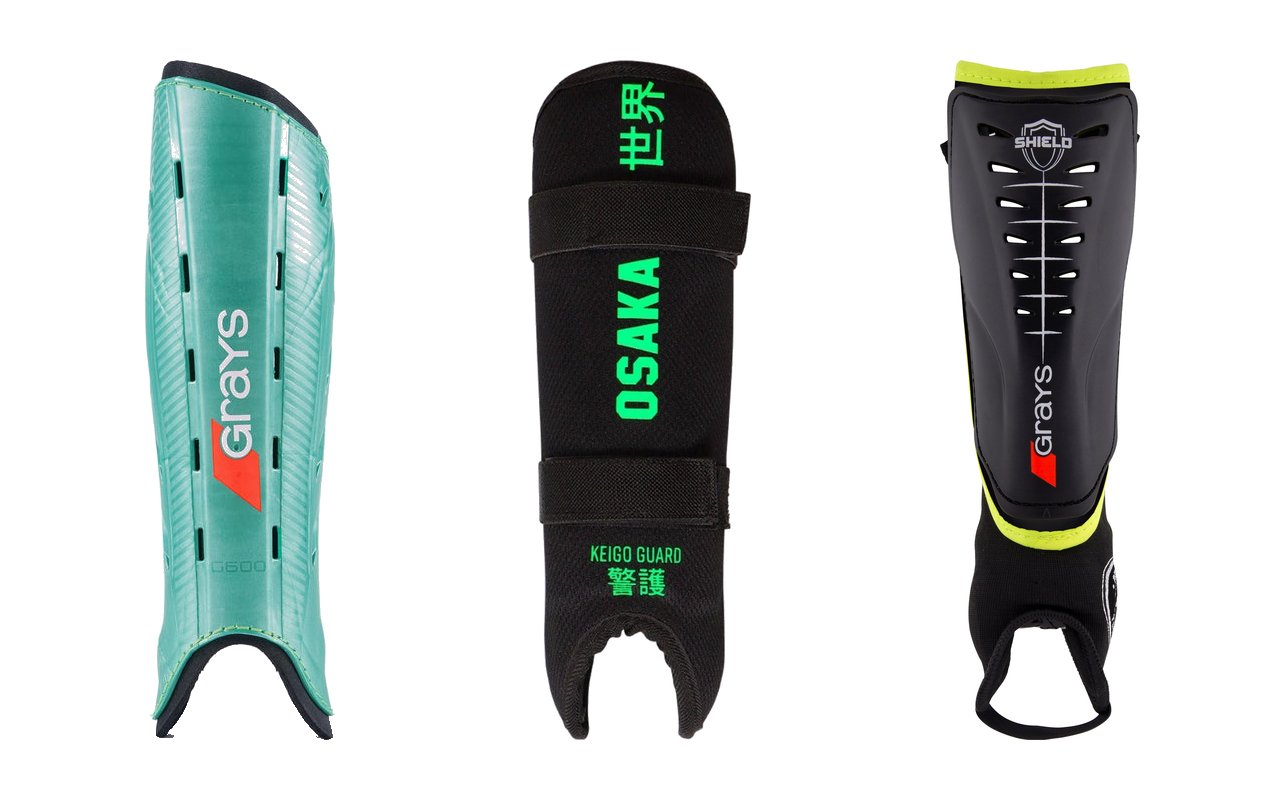
This is a follow-up to the post Shin guards and mouthguards – what is compulsory and what is sensible. That article explains what the rules recommend and what competition regulations may require, and describes the types of mouthguard. Here we deal with field hockey shin guards themselves: how the models in our range are built, how to measure the shin and choose a size for a child and an adult, how to put them on so they do not slip when running, what to add to your protection indoors and at penalty corners, how to look after them and what a field player’s full protection costs.
Product data comes from the pages in our shop as of October 2026, and prices from the product list on 27 October 2026. Check current sizes, colours and prices on the product page.
What changes in the rules from 1 November 2026
The FIH rules of hockey in force from 1 March 2026 recommend that field players wear shin, ankle and mouth protection. The edition in force internationally from 1 November 2026 changes the wording to a stronger one: it strongly recommends such protection. It is still a recommendation, not an obligation written into the rules of the game; the date from which the new edition applies in domestic competitions is set by the national association, and an obligation can be introduced by the regulations of a given competition, a tournament, a club or a school. The FIH rules of indoor hockey have a similar provision: the 2023 edition highly recommends shin, ankle and mouth protection, and the edition from 1 November 2026 strongly recommends it.
Two things that matter when putting protection together follow from the same rule. Knee guards worn to defend a penalty corner may be worn over the socks if they are exactly the same colour as the socks or black. A face mask when defending a penalty corner and a penalty stroke is recommended, and in the edition from 1 November 2026 strongly recommended. National federations issue their own guidance: England Hockey, in its answers to safety questions, strongly recommends shin, ankle and mouth protection but does not call it compulsory.
How the shin guards in our range are built
A hockey shin guard is a hard shell on the outside and a layer of foam or padding on the inside. The shell takes the contact with the ball and stick, the foam cushions and spreads the pressure. It is worn under the socks, which hold it on the leg. The product pages of the six models in our range show four designs:
- Removable lining – the Grays G600 Shinguard has a polymer shell and a removable foam lining that can be taken out for washing.
- Fabric lining and ventilation – the Gryphon Classic Shinguards has a soft fabric lining and ventilation holes. The manufacturer says the guard is flexible and moulds to the shape of the leg over time.
- Anatomical shape and straps – Osaka Shinguard and Osaka Keigo Shinguard have a hard shell with a layer of foam, an anatomical shape and strap fastening, which according to the description keeps the guard in place when running and in tackles.
- Light shell – Grays Shield Shinguard has a light shell with foam padding and is described in the data as a model for beginner and recreational level. Grays G700 Pro Shinguard has only sizes, colour and intended use on its product page, with no construction details.
A slip-in model is held by the socks, so the socks must be pulled up well and reach below the knee. A model with straps may hold more securely; it is worth tucking the straps under the socks so they do not catch on the stick. The extent of protection depends on the design and the fit: a shin guard shields the shin, but it does not remove the risk of injury.
Ankle protection
The FIH rules recommend protecting not only the shins but also the ankles. Shin guards differ in how low they reach and whether they have ankle protection. In the descriptions of the models in our range, Osaka mentions ankle protection: the Osaka Shinguard and Osaka Keigo Shinguard are described as protecting the shin and the ankle. For the other models, the product page talks about shin protection, so if ankle cover matters to you, check it when trying them on or in the manufacturer’s specification. Ankle protection must not restrict the movement of the foot in the shoe, so try the shin guard on in the footwear you play in.
How to measure the shin and choose a size
A lettered size (2XS, XS, S, M, L, XL) is the manufacturer’s label, not a measurement. The same M at two brands can differ in length, which is why a size from one brand does not carry over one to one to another. A shin guard should cover the shin from just below the knee to just above the ankle: too short leaves part of the shin exposed, too long can push under the kneecap when the leg bends or rest on the foot.
Measuring the shin
- The player sits with the leg bent at a right angle, foot flat on the floor.
- Measure the distance from just below the kneecap to just above the ankle, along the front edge of the shin.
- Compare the result with the manufacturer’s chart for the particular model.
On the shin guard pages in our shop we give letter sizes. The exception is the Gryphon Classic Shinguards, for which the manufacturer gives the length measured along the centre line of the longest side: S – 30 cm, M – 33 cm, L – 36 cm. For the other models, check the manufacturer’s chart or get in touch with us. We described how to read Grays and Osaka size labels in the post on how to read glove and shin guard sizes.
The sizes of the six models side by side
If you are looking for a specific size rather than a specific model, this overview saves clicking through product pages:
- 2XS or XXS – Grays Shield Shinguard, Grays G600 Shinguard, Osaka Keigo Shinguard.
- XS – Grays Shield Shinguard, Grays G600 Shinguard, Osaka Keigo Shinguard.
- S – all six models.
- M and L – Grays G600 Shinguard, Gryphon Classic Shinguards, Grays G700 Pro Shinguard, Osaka Shinguard.
- XL – only Grays G700 Pro Shinguard.
Trying them on
- Put on the shin guard, pull up the socks and put on the shoes you play in.
- Do a few squats, lunges and a short run on the spot.
- Check that the shin guard does not shift sideways or slide down towards the ankle.
- Bend your knee: the top edge should not press on the kneecap.
- If you are torn between two sizes, go back to the shin measurement and the manufacturer’s chart.
How to put on a shin guard and socks
- Put on a thin sock first, if you use one, then the shin guard, so that the bottom edge ends above the ankle and the top edge below the knee.
- On a model with straps, fasten the bottom strap first, then the top one, tight enough to hold the guard but without squeezing the calf.
- Pull the sock up over the shin guard all the way to the knee. The sock should cover the shin guard completely.
- Arrange the straps and the edges of the sock so that nothing sticks out or catches on the stick.
- Take a few steps and do a squat. If the shin guard turns on the leg, adjust its position or the strap tension before you go onto the pitch.
Socks matter especially with slip-in models. A stretched or too short sock stops holding the shin guard, and it starts to shift during play even if the size is right. Before deciding that a shin guard is too small or too big, check the state of the socks: that is the cheaper replacement.
Shin guards for children
The principles are the same for a child, with one difference: legs grow, so shin guards are worth trying on before every season. A shin guard one size too big can slide around on the leg, and one that ends at the knee gets in the way when bending the legs, so buying to grow into is not a good idea. In our range, three models come in the smallest sizes, 2XS and XXS:
- Grays Shield Shinguard – sizes 2XS, XS and S, in several colour versions, including fluo pink and black, blue, and blue and red; PLN 86–87.
- Grays G600 Shinguard – sizes from 2XS to L, so the same model can be bought for a child and an adult; PLN 108.
- Osaka Keigo Shinguard – sizes XXS, XS and S, black; described in the data as a senior model despite the small sizes; PLN 108.
For a child, trying on with socks is even more important than for an adult, because shorter legs leave less room between the knee and the ankle. If a child complains that a shin guard rubs, first check that it is positioned correctly and that the size fits before buying another model. Colour has a practical side in the changing room and at tournaments: shin guards in a fluo version are easier to find among other people’s.
Shin guards for adults
An adult who is starting out can choose from all the models in sizes from S upwards: the Grays G600 Shinguard (up to L), Gryphon Classic Shinguards (S, M, L), Osaka Shinguard (S, M, L) and Grays G700 Pro Shinguard (S, M, L, XL). For a tall player with a long shin, it is worth also trying the G700 Pro, the only model in our range with an XL size, and with the Gryphon Classic, comparing the shin length with the centimetres given.
An adult’s size does not change from season to season, so the choice depends more on the fastening, the lining and how the shin guard sits on the leg when running. If you train several times a week, look at ventilation and whether the lining can be washed, because the shin guard needs to dry between sessions.
Shin guards in our range: a comparison
In the protection category we have six shin guard models from three brands: Grays, Gryphon and Osaka. All of them are labelled in the shop data for outdoor and indoor play.
| Model | Sizes | Construction per product page | Price on 27.10.2026 |
|---|---|---|---|
| Grays Shield Shinguard | 2XS, XS, S | light shell, foam lining | PLN 86–87 |
| Grays G600 Shinguard | 2XS, XS, S, M, L | polymer shell, removable foam lining | PLN 108 |
| Osaka Keigo Shinguard | XXS, XS, S | hard shell, foam, straps | PLN 108 |
| Gryphon Classic Shinguards | S (30 cm), M (33 cm), L (36 cm) | fabric lining, ventilation holes | PLN 119 |
| Grays G700 Pro Shinguard | S, M, L, XL | the product page gives no construction details | PLN 150–152 |
| Osaka Shinguard | S, M, L | hard shell, foam, straps, anatomical shape | PLN 162 |
- Largest size. In our range, only the Grays G700 Pro Shinguard comes in XL.
- Centimetres given. Only the Gryphon Classic has the length in centimetres on its product page.
- Removable lining. The Grays G600 has one, which makes washing and drying easier.
- Straps. Both Osaka models mention strap fastening in their description.
- Colours. The Grays G600 and Grays Shield each come in four colour versions, the Gryphon Classic is white, the Osaka Keigo black, the Osaka Shinguard white and black, and the Grays G700 Pro black and light blue.
The table is not a ranking. The choice depends on the length of the shin, the fastening that suits the player and how the shin guard sits on the leg when trying it on.
Indoor and penalty corners: what to add to shin guards
The same shin guards are used on turf and indoors, and the difference is in the surroundings: indoors the game is played low to the floor and along the boards, which is why some players add knee guards and a glove. Our range includes Ritual Vapor Knee Guards (size M; PLN 129) and TK PC Elite Knee Guards (S, M, L; PLN 173). When defending a penalty corner the FIH rules allow knee guards to be worn over the socks if they are the same colour as the socks or black. Both models in our range are black.
A mask is also worn to defend a penalty corner. In the category field hockey protection there are the Grays Facemask (Junior and Senior; a transparent polycarbonate shell with dual-density foam; PLN 258) and the TK PC Elite Face Mask (S-M and M-L; PLN 390). When and how defenders put it on is covered in the post on the penalty corner and defenders' protective equipment.
A left-hand glove is not required by the rules, but when playing low and indoors it shields the hand from the ball and other players’ sticks. Gloves marked Indoor and Outdoor, such as Gryphon G Mitt OP G5 (PLN 108) or Ritual Vapor Glove Left (PLN 129), serve in both formats; Gryphon Indoor Blockr (PLN 86) is marked for indoor only. You will find field and indoor models in the field and indoor hockey gloves.
Mouthguard: briefly, because the types were covered earlier
The types of mouthguard, moulding according to the manufacturer’s instructions and hygiene were covered in the previous post, linked at the start of this text. Here only what is added for a child: the teeth change, milk teeth fall out, permanent ones come through and the jaw grows, so a mouthguard that fitted at the start of the season may sit badly after a few months. Check the fit regularly, and when the mouthguard stops staying on the teeth or the child starts spitting it out during play, replace it or consult a dentist. England Hockey recommends that a mouthguard be fitted by a dentist or purchased through a reputable provider, and replaced every year. We do not currently have mouthguards in our range, so you will buy this item elsewhere, before the first training session, and it is worth keeping a second, spare one in the bag.
Looking after shin guards
Shin guards are damp after training, and if they stay shut in the bag until the next session they start to smell. A few rules help keep them in good condition:
- After training, take the shin guards out of the bag and dry them in an airy place, away from radiators and hair dryers.
- Wash a removable lining, as in the Grays G600, according to the manufacturer’s instructions.
- Wipe the shell with a damp cloth, without solvents.
- Check the straps and Velcro: dirty Velcro holds less well.
- Shin guards with fabric padding, such as Gryphon Classic, may need more time to dry than models with foam alone; with training on consecutive days a second pair solves the problem of damp padding.
We wrote more about washing and drying your whole kit in the post on washing, drying and storing hockey kit.
When shin guards need replacing
Replacement depends on condition and fit, not on the age of the shin guards. The following call for an assessment before further use:
- a crack or permanent deformation of the shell,
- foam or lining that is delaminating, crumbling or permanently compressed,
- a shin guard that no longer fits: it exposes the shin, slips or rubs,
- broken straps or Velcro that no longer hold.
Straps and Velcro can sometimes be repaired if the design allows it and there is no need to interfere with the shell or the protective layer. If the shell or the foam is damaged, the shin guard does not go back into play without an assessment. If in doubt, follow the manufacturer’s recommendations or write to us.
How much protection for a field player costs
At the prices in our shop on 27 October 2026, basic protection for a field player looks like this:
- Shinguards – from PLN 86–87 (Grays Shield Shinguard) to PLN 162 (Osaka Shinguard).
- Mouthguard – outside our range; the price depends on the type: ready-made, moulded or made by a dentist.
- A glove for the left hand – in our range from PLN 86 (Gryphon Indoor Blockr, for indoor) or PLN 86–87 (Grays Anatomic Pro, for outdoor).
- Knee guards – PLN 129 (Ritual Vapor Knee Guards) or PLN 173 (TK PC Elite Knee Guards), if the coach recommends them indoors.
- Penalty corner mask – PLN 258 (Grays Facemask) or PLN 390 (TK PC Elite Face Mask), when you regularly defend corners; to start with, a club mask will do.
In numbers: a child starting on turf needs shin guards at PLN 86–87 and a mouthguard from outside our range. An adult playing indoors, who plays low and adds a glove and knee guards, spends from PLN 108 (Grays G600 Shinguard) plus PLN 86 (Gryphon Indoor Blockr) plus PLN 129 (Ritual Vapor Knee Guards), that is PLN 323. A defender put on penalty corners adds a mask from PLN 258 if the club one is no longer enough. A glove, knee guards and a mask are purchases for specific playing conditions and a role on the pitch, which are best discussed with the coach.
Questions before buying shin guards
- Slip-in or with straps? Slip-in guards are simpler to put on and depend on good socks. According to Osaka’s description, straps keep the guard in place while running and in close contact. Try both types if you can.
- Will shin guards from another sport do? The FIH rules do not name a specific type of shin guard, but hockey shin guards are designed for contact with a hard ball and a stick at ground level. If the club has its own requirements, check them before buying.
- Is one pair of shin guards enough for outdoor and indoor? Yes, all the models in our range are labelled Indoor and Outdoor in the data.
- Should I buy a bigger size for a growing child? No: a shin guard that is too big can slip and expose the shin. It is better to try on the kit before every season.
- One model for siblings of different ages? Grays G600 Shinguard comes in sizes from 2XS to L, so the same model, in different sizes, will serve a younger and an older child.
- What to check after the first training sessions? Whether the shin guard chafes below the knee or above the ankle, whether it turns when running and whether the sock still holds it. If it chafes, turns or the sock has stopped holding it, first correct the positioning and the socks, and only then consider a different size.
You will find six shin guard models from Grays, Gryphon and Osaka in sizes from 2XS to XL, together with knee guards and masks, in the category field hockey shin guards.