

Blog
A field hockey stick for a child – how to choose length, bow and material (a guide for parents)

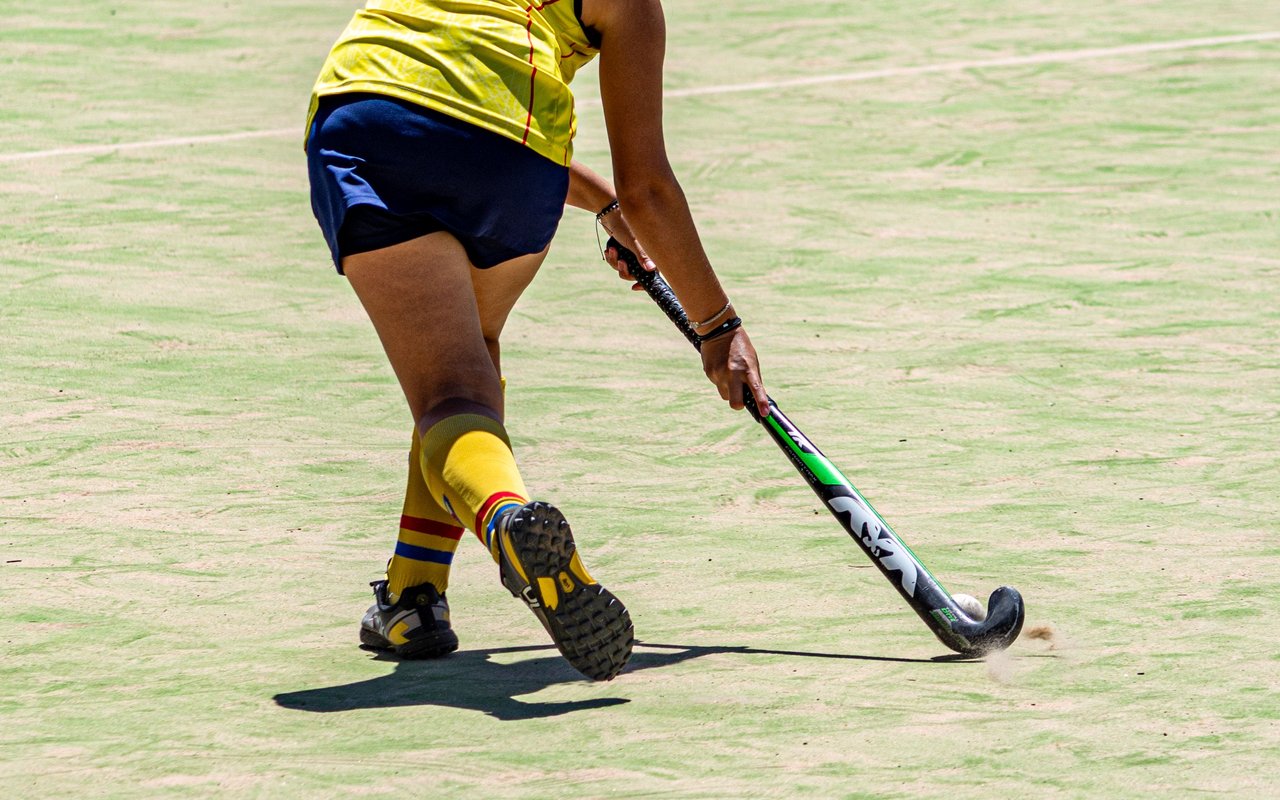
A hockey stick for a child is chosen in three steps: first a length that suits the child’s height and build now, not in a year’s time, then a material dominated by glass fibre with a small proportion of carbon fibre, and finally a gentle bow that makes flat receiving and passing easier. Brand, colour and price matter, but only after these three parameters. This guide is about an outdoor stick; an indoor stick is a separate purchase, which we described in the post on how to choose an indoor stick for a child.
In this article we compare junior sticks from our range. The technical data comes from the product pages as of October 2026, and the prices from the product list in the shop on 27 October 2026. Check current prices, colours and available lengths on the product page.
Three questions before you buy
Before you start comparing models, answer three questions. They decide whether you buy now at all and which stick makes sense.
- Where will the child train in the coming months? If sessions are indoors in autumn and winter and you go back outdoors in spring, the outdoor stick can wait, and a stick bought today may already be too short by spring.
- Does the club lend sticks? Some clubs have sticks for new players. Then the first stick of your own is bought after a few sessions, once the coach and the child know which length fits.
- How often is training? With one session a week, an entry-level stick is entirely sufficient. With several sessions and the first matches, it is worth looking at models that manufacturers describe as development sticks.
Length: where the choice starts
Stick length is given in inches, measured from the end of the handle to the bottom of the head. Junior sticks in our range run from 28 to 35.5 inches. Length depends mainly on height, but also on body proportions and on how low the child works over the ball, so a height chart is a starting point, and trying the stick in hand settles it.
A simple test: stand the stick upright next to the child, head on the floor by the foot. The end of the handle should reach roughly the top of the hip bone. It is a rough starting point, not the final choice. We described one manufacturer’s example height chart and how to measure in the post on how to choose stick length for children and adults. Different manufacturers’ charts are not the same, so before buying compare the result with the chart for the model you have chosen.
Why not buy a stick to grow into
Field hockey is played bent over, with the hands low and the stick close to the ball. A stick that is too long sets the body position higher and moves the child away from the ball, which makes carrying and receiving harder, and habits from that period stick. A stick that is too short can require excessive bending. If the child is exactly between two lengths, it is worth comparing both in hand, in a playing position, and asking the coach. A stick one size longer only makes sense when the fitting is borderline, not because the child “will grow anyway”.
Lengths in our range
- 28 inches – Naked Genesis Jr, Osaka Pro Tour GF 2.0 Grow Bow Junior.
- 30 inches – Naked Genesis Jr, Naked Prodigy 15 Jr, Osaka Pro Tour GF 2.0 Grow Bow Junior, Grays GT3.
- 31 inches – Grays GT3.
- 32 inches – Naked Genesis Jr, Naked Prodigy 15 Jr, Naked Supreme Jr, Ritual Velocity 25, TK F Jr Control Bow, Grays GT3.
- 33 inches – TK F Jr Control Bow, TK Maxi, Grays GT3.
- 34 inches – Naked Prodigy 15 Jr, Naked Supreme Jr, Osaka Pro Tour GF 2.0 Grow Bow Junior, Ritual Velocity 25, Ritual Velocity 45, TK F Jr Control Bow, Grays GT3.
- 34.5 and 35.5 inches – Gryphon Tour Pro-J G26.
- 35 inches – TK F Jr Control Bow, TK Maxi, Grays GT3.
The list shows the lengths recorded in the product data. Whether a particular length is available at the moment, you can check on the product page.
Material: glass fibre, carbon and aramid
Composite sticks combine several kinds of fibre. The proportion of carbon fibre affects stiffness: the more of it, the stiffer the stick and the harder it returns the ball when hitting, but also the less forgiving it is of an inaccurate reception. Glass fibre gives a more flexible construction. Aramid and Kevlar are additives that manufacturers describe as damping vibration or reinforcing the construction.
A child who is learning to receive, carry and pass does not need a stiff stick. Their swing is less powerful than an adult’s, and a more flexible stick bends more easily on impact. Ritual says this directly about the Velocity 25: a low carbon content lowers stiffness, which with a less powerful swing gives a more predictable pass.
This is the composition of the junior sticks in our range, where the manufacturer gives it:
- no carbon fibre – Osaka Pro Tour GF 2.0 Grow Bow Junior: 95% glass fibre and 5% Kevlar,
- about 10% – Naked Genesis Jr: glass fibre with about 10% carbon fibre,
- 15% – Naked Prodigy 15 Jr: 15% carbon fibre, the rest glass fibre,
- 25% – Ritual Velocity 25: 25% carbon fibre, 70% glass fibre, 5% aramid,
- 30% – Naked Supreme Jr: 30% Toray carbon fibre, glass fibre and Kevlar,
- 45% – Ritual Velocity 45: 45% carbon fibre, 50% glass fibre, 5% aramid.
Grays describes the GT3 as an entry-level composite with aluminised fabric, without giving percentages, and Gryphon gives the composition of the Tour Pro-J G26 as carbon fibre, glass fibre and aramid, also without proportions. For the TK F Jr Control Bow and TK Maxi the product page does not give the composition, so we do not compare them on this point.
Carbon percentages are best compared within one manufacturer’s series. The character of a stick is also affected by the fibre grade, the lay-up and the shape, so two sticks from different brands with the same percentage do not have to behave identically. We wrote more about materials in the post how much carbon do you need.
Bow: why a gentle curve is easier for a child
The bow is the curve of the shaft, described by two figures: the depth of the curve and the distance of its highest point from the head. The FIH rules limit both parameters: the depth to 25 mm, and the point of maximum bow must not be closer to the base of the head than 200 mm. The same limits are in the edition of the rules effective from 1 November 2026.
The closer the peak of the curve is to the head and the deeper it is, the easier it is to slide the stick under the ball and lift it. That helps with the flick, aerial passes and the drag flick, but makes a flat reception harder. At the start, a child learns exactly that: flat receiving, carrying and passing, which is why a gentler curve placed higher up the shaft is more comfortable for them. This is how it looks in the junior sticks from our range:
- Osaka Pro Tour GF 2.0 Grow Bow Junior – Grow Bow, 17 mm deep, peak 300 mm from the head. The manufacturer describes it as a shallower and higher curve than in senior sticks.
- Grays GT3 – GT profile, 22 mm deep, peak 300 mm from the head; according to Grays, the simplest profile in their range.
- Naked Genesis Jr – Classic profile, a traditional curve; the product page does not give figures.
- TK F Jr Control Bow – Control Bow profile, which according to the description supports secure carrying and receiving of the ball; the page for the junior model does not give figures.
- Ritual Velocity 25 and Velocity 45 – low/mid bow, 24 mm deep, peak 250 mm from the head.
- Naked Supreme Jr – low bow with its peak about 200 mm from the head, described as a stick for a junior developing low bow technique.
For a first stick, the profiles at the top of this list work better. A low bow makes sense once the child has mastered the flat reception and is starting to work on lifting the ball, ideally in agreement with the coach. You will find a broader discussion of profiles in the post on what stick bow means.
Head, handle and weight
Besides length, material and bow, product pages sometimes give a few other details that also matter for a child.
- Handle thickness. For the Pro Tour GF 2.0 Grow Bow Junior, Osaka writes about a slimmer shaft suited to smaller hands. A handle that is too thick makes it harder for a small hand to turn the stick when carrying the ball.
- Head. The Grays GT3 has a low-set Micro head, which the manufacturer describes as making ball carrying easier. Ritual gives a head angle of 45° for the Velocity 25 and 45. Head names differ between manufacturers, so go by the description of the particular model.
- Weight. Among the junior sticks in our range, only the Osaka Pro Tour GF 2.0 Grow Bow Junior gives its weight: 370–435 g, depending on length. For the other models the weight is not given, so we do not compare them on this point. The description of the Gryphon Tour Pro-J G26 mentions a lighter balance than the senior version, without figures.
The FIH rules limit the weight of a stick to 737 g and require the stick, including its grip, to pass through a ring with an interior diameter of 51 mm. When choosing a stick for a child, comfort in the hand matters more than these limits.
Junior sticks from our range: which one at which stage
Below are the sticks that are described in the shop data as junior sticks or that come in junior lengths with a description for beginners. We have grouped them by the stage the child is at, based on the manufacturers’ descriptions, not on a ranking.
First training sessions
TK Maxi (33 and 35 inches; PLN 53–145 depending on the variant) – according to the description, an affordable stick for training and recreational play, for first steps with a stick. The product page gives neither the composition nor the bow.
TK F Jr Control Bow (32, 33, 34 and 35 inches; PLN 160–194) – a junior version with a Control Bow profile, intended for younger players, for everyday training.
Naked Genesis Jr (28, 30 and 32 inches; PLN 207) – a junior stick made of glass fibre with about 10% carbon fibre, Classic profile. The manufacturer describes it as light and forgiving, for young players and beginners. It is one of two sticks in our range in a 28-inch length.
Osaka Pro Tour GF 2.0 Grow Bow Junior (28, 30 and 34 inches; PLN 388) – no carbon fibre, 17 mm Grow Bow, a slimmer shaft and the only weight given in this comparison. Osaka calls it the first step towards its composite sticks.
Regular training
Naked Prodigy 15 Jr (30, 32 and 34 inches; PLN 280) – 15% carbon fibre. According to the description, the added carbon gives more power than a pure glass fibre stick while staying forgiving of mistakes.
Grays GT3 (from 30 to 35 inches in junior versions and 36.5 inches; PLN 317) – 22 mm GT profile, Micro head, entry-level construction. The same model comes in children’s lengths and a senior one, so once the child outgrows it they can stay with the same profile.
Ritual Velocity 25 (32 and 34 inches; PLN 409) – 25% carbon fibre, 24 mm low/mid bow. Labelled in the data for outdoor and indoor play. Ritual aims it at beginners and at juniors moving up from children’s models.
A junior developing their technique
Naked Supreme Jr (32 and 34 inches; PLN 366) – 30% carbon fibre and a low bow profile. The manufacturer describes it as an intermediate step between an entry-level stick and a senior one, for a junior learning the flick.
Ritual Velocity 45 (34 inches; PLN 625) – 45% carbon fibre, the same profile as the Velocity 25. According to Ritual, it gives more power than the Velocity 25 at the cost of slightly less tolerance for error. Labelled for outdoor and indoor play.
Gryphon Tour Pro-J G26 (34.5 and 35.5 inches; PLN 754) – the junior version of the Tour line, made of carbon fibre, glass fibre and aramid, Regular head. Gryphon aims it at juniors who already train seriously. Labelled in the data for outdoor and indoor play.
An older junior who needs 34 or 35 inches and plays regularly at a club can also compare sticks from senior series available in shorter lengths, for example the TK P4 Late Bow (34, 35, 36.5 and 37.5 inches; 30% carbon fibre, 24 mm Late Bow with its peak 220 mm from the head; PLN 412–650). TK notes that anyone still learning to receive the ball will find it easier with a Control Bow profile.
Comparison in one table
| Model | Lengths (inches) | Composition per product page | Bow per product page | Price on 27.10.2026 |
|---|---|---|---|---|
| TK Maxi | 33, 35 | no data | no data | PLN 53–145 |
| TK F Jr Control Bow | 32, 33, 34, 35 | no data | Control Bow | PLN 160–194 |
| Naked Genesis Jr | 28, 30, 32 | glass fibre, approx. 10% carbon | Classic | PLN 207 |
| Naked Prodigy 15 Jr | 30, 32, 34 | 15% carbon, glass fibre | junior profile | PLN 280 |
| Grays GT3 | 30–35, 36.5 | entry-level composite | 22 mm, peak at 300 mm | PLN 317 |
| Naked Supreme Jr | 32, 34 | 30% carbon, glass fibre, Kevlar | low bow, peak at approx. 200 mm | PLN 366 |
| Osaka Pro Tour GF 2.0 Grow Bow Junior | 28, 30, 34 | 95% glass fibre, 5% Kevlar | 17 mm, peak at 300 mm | PLN 388 |
| Ritual Velocity 25 | 32, 34 | 25% carbon, 70% glass fibre, 5% aramid | 24 mm, peak at 250 mm | PLN 409 |
| Ritual Velocity 45 | 34 | 45% carbon, 50% glass fibre, 5% aramid | 24 mm, peak at 250 mm | PLN 625 |
| Gryphon Tour Pro-J G26 | 34,5, 35,5 | carbon, glass fibre, aramid | Pro profile | PLN 754 |
An outdoor stick vs an indoor stick
In Poland the season is split between outdoor and indoor hockey, and some children train in both. An outdoor stick and an indoor stick are two different products: hitting the ball is not allowed indoors, play runs along the floor and the boards, and manufacturers design indoor sticks for those conditions. Some sticks in this comparison are labelled in the shop data for both formats: the Ritual Velocity 25, Ritual Velocity 45 and Gryphon Tour Pro-J G26. The others are labelled for outdoor play only.
If the child starts in autumn and will spend the first months indoors, consider an indoor stick first, or a stick labelled for both formats, and buy an outdoor-only stick closer to spring, when you know how much the child has grown. Before using an outdoor stick indoors, ask the coach whether the club allows it.
How to check a stick before buying
Ideally, the child should hold the stick. A fitting takes a few minutes:
- The child stands in the shoes they play in and takes up a playing position: knees slightly bent, upper body leaning forward, left hand at the top of the handle, right hand lower down.
- The stick head should lie flat on the ground, without the heel or the toe of the head lifting.
- The child makes a few movements as if carrying the ball, turning the stick with the left hand. If they have to straighten up, the stick may be too long; if they hunch over a lot, it may be too short.
- Check that the hand wraps around the handle without effort and that the grip is not too thick.
- Compare two adjacent lengths of the same model, if they are available.
If you are buying online, measure the child with the hip test, compare the result with the manufacturer’s chart and ask the coach for an opinion. If in doubt, write to us with the child’s height and where they train.
When to switch to a longer or stronger stick
A child’s stick is treated as seasonal kit. A good practice is a fitting before every season, outdoors and indoors separately. Signs that it is time for a change:
- The child hunches over when carrying the ball or the hip test falls clearly below the hip bone – the stick may already be too short.
- The coach starts working with the child on lifting the ball and the flick – then it is worth talking about a stick with a lower bow or a higher carbon content, for example from a series the child already knows.
- The stick is damaged. A crack in the shaft or head, exposed fibres or a change in how the stick behaves in play mean it should not be used until it has been assessed. Leave the assessment to the manufacturer or retailer.
A stick the child has outgrown can serve a younger sibling if it is in good condition. The Grays GT3 comes in lengths from 30 to 35 inches, so siblings can play with the same model in different lengths.
Mistakes when buying a stick for a child
- A stick “to grow into”. A longer stick does not save money if it makes learning harder for a whole season.
- A stick like the internationals use. A high carbon content and a very low bow are designed for technique the child is only just learning.
- Choosing by colour. Colour matters to a child and it is worth respecting, but only among sticks of the right length and profile.
- An outdoor stick bought for indoors without asking the coach. The club’s and the venue’s rules may not allow it.
- A stick without protection. The child goes onto the pitch with a stick and wearing shin guards, with a mouthguard, which the FIH rules recommend.
What else a child needs to start
Besides a stick, a child needs shin guards, a mouthguard and shoes that suit the surface. The smallest shin guard sizes in our range, 2XS and XXS, are offered by the Grays Shield Shinguard (PLN 86–87), Grays G600 Shinguard (PLN 108) and Osaka Keigo Shinguard (PLN 108). You will find them all in the category shin guards for children and adults.
A soft ball is useful for practising ball carrying at home. The TK Soft Ball (PLN 26) is made of polyurethane foam and, according to the manufacturer’s description, is suitable for children and beginners to practise at home. Practise with a hard outdoor ball only in a safe place, away from windows and other people. Both kinds of ball are in the category hockey balls.
Choose a stick for your child calmly, with a fitting and a conversation with the coach. You will find all the junior models from this comparison, together with adult sticks, in the category field hockey sticks.