

Blog
Klemens Maciaszczyk Memorial 2026 in Rogowo – the tournament and the Field Hockey Zone stand

The Klemens Maciaszczyk Memorial 2026 in Rogowo, played on 29 and 30 August, was the 59th edition of a tournament the Polish Field Hockey Association describes as the oldest regularly held team sports tournament in Poland. Five teams took part, including one from Germany, and HKS Siemianowiczanka won. For Field Hockey Zone it was a debut: our first stand beside the pitch, the first children’s contests on our own 6 × 9 m pitch, an autograph session and a stick draw. Below is a report from both days, the full results and what the photos from Rogowo show about the players’ kit, from stick to goalkeeper’s helmet.
Match results and the final standings are taken from the report of the Polish Field Hockey Association. We took the photos in this post ourselves during the tournament; they show kit and atmosphere, with no players’ names and no children’s faces.
What the Klemens Maciaszczyk Memorial is
The tournament is organised by Ludowy Klub Sportowy Rogowo, founded in 1947 by Klemens Maciaszczyk. According to PZHT, the only older event in Poland is the Janusz Kusociński athletics meeting; among team sports tournaments the Memorial is the oldest. The 2026 edition was the 59th and, as the association reports, was co-financed by the Kujawsko-Pomorskie Voivodeship. Rogowo lies in the Pałuki region, in Żnin county, and hockey is the number one sport here: LKS Rogowo plays in the national competitions we write about in the post on hockey in Poland, its clubs and leagues.
The tournament’s patron was born on 18 November 1922 in Gniezno. In 1947 he settled in Rogowo and in the same year founded the club, of which he was the long-serving president and coach. From 1952 he was active in hockey’s governing bodies, including the PZHT Audit Committee, and from 1958 he was an umpire. He himself played hockey and table tennis. Thanks to him LKS Rogowo, as the only club with a rural base in the first division, gained national standing and international contacts. Klemens Maciaszczyk died on 13 August 1967. His brother, Narcyz Maciaszczyk, represented Poland twice at the Olympic Games, as we wrote in our preview of the tournament.
Who played and how it went
Five teams took part: hosts LKS Rogowo, HKS Siemianowiczanka from Siemianowice Śląskie, HK Pomorzanin Toruń, KS AZS AWF Poznań (listed in the PZHT report as Enea AZS AWF Poznań) and Braunschweiger THC from Germany, which gave the tournament its international character. It was played as a round robin, with five matches on Saturday and five on Sunday, ten in total.
| Day | Match | Result |
|---|---|---|
| Saturday 29 August | Enea AZS AWF Poznań – Braunschweiger THC | 2:1 |
| Saturday 29 August | HK Pomorzanin Toruń – HKS Siemianowiczanka | 2:5 |
| Saturday 29 August | LKS Rogowo – Enea AZS AWF Poznań | 2:1 |
| Saturday 29 August | Braunschweiger THC – HK Pomorzanin Toruń | 4:1 |
| Saturday 29 August | HKS Siemianowiczanka – LKS Rogowo | 10:1 |
| Sunday 30 August | Enea AZS AWF Poznań – HK Pomorzanin Toruń | 1:3 |
| Sunday 30 August | Braunschweiger THC – HKS Siemianowiczanka | 1:2 |
| Sunday 30 August | LKS Rogowo – HK Pomorzanin Toruń | 2:2 |
| Sunday 30 August | Enea AZS AWF Poznań – HKS Siemianowiczanka | 1:5 |
| Sunday 30 August | Braunschweiger THC – LKS Rogowo | 6:1 |
Final standings according to PZHT: 1. HKS Siemianowiczanka, 2. Braunschweiger THC, 3. HK Pomorzanin Toruń, 4. LKS Rogowo, 5. KS AZS AWF Poznań. Siemianowiczanka won all four of its matches, including the biggest win of the tournament, 10:1 against the hosts. The hosts began with a 2:1 win over the Poznań AZS, drew 2:2 with Pomorzanin on Sunday and lost two matches. The team from Braunschweig, after a 1:2 defeat to AZS AWF on Saturday, beat Pomorzanin 4:1 and Rogowo 6:1, lost 1:2 to Siemianowiczanka and finished second with two wins and two defeats. The association’s report lists no individual awards, so we do not name any.
Saturday: five matches and 29 goals
The first day opened with Enea AZS AWF Poznań against Braunschweiger THC, won by the Poznań side 2:1. In the second match HKS Siemianowiczanka beat HK Pomorzanin Toruń 5:2, then the hosts beat AZS AWF 2:1 and had maximum points after their first match. The fourth match was a 4:1 win for Braunschweiger THC over Pomorzanin. The day closed with Siemianowiczanka against Rogowo, which ended 10:1, the biggest score of the whole tournament. The five Saturday matches produced 29 goals.
Sunday: a draw for the hosts and a clean sweep for Siemianowiczanka
Sunday began with AZS AWF against Pomorzanin, won by the Toruń side 3:1. In the meeting of Saturday’s two best-scoring teams, Siemianowiczanka beat Braunschweiger THC 2:1 and so secured first place before the final round. LKS Rogowo drew 2:2 with Pomorzanin, Siemianowiczanka beat AZS AWF 5:1, and to finish Braunschweiger THC beat the hosts 6:1. The Sunday matches produced 24 goals, 53 in the whole tournament. Pomorzanin, which started with two defeats, finished third after its win over AZS AWF and the draw with Rogowo.
The Field Hockey Zone stand: a debut beside the pitch
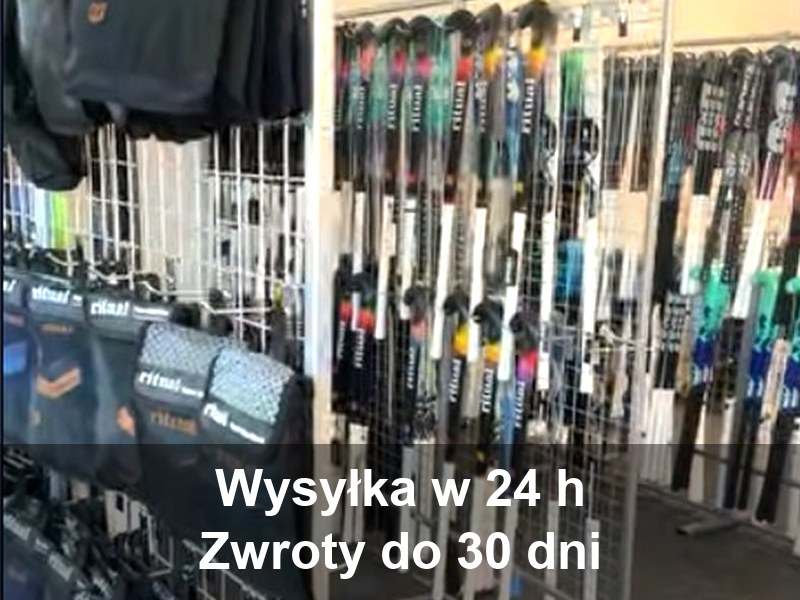
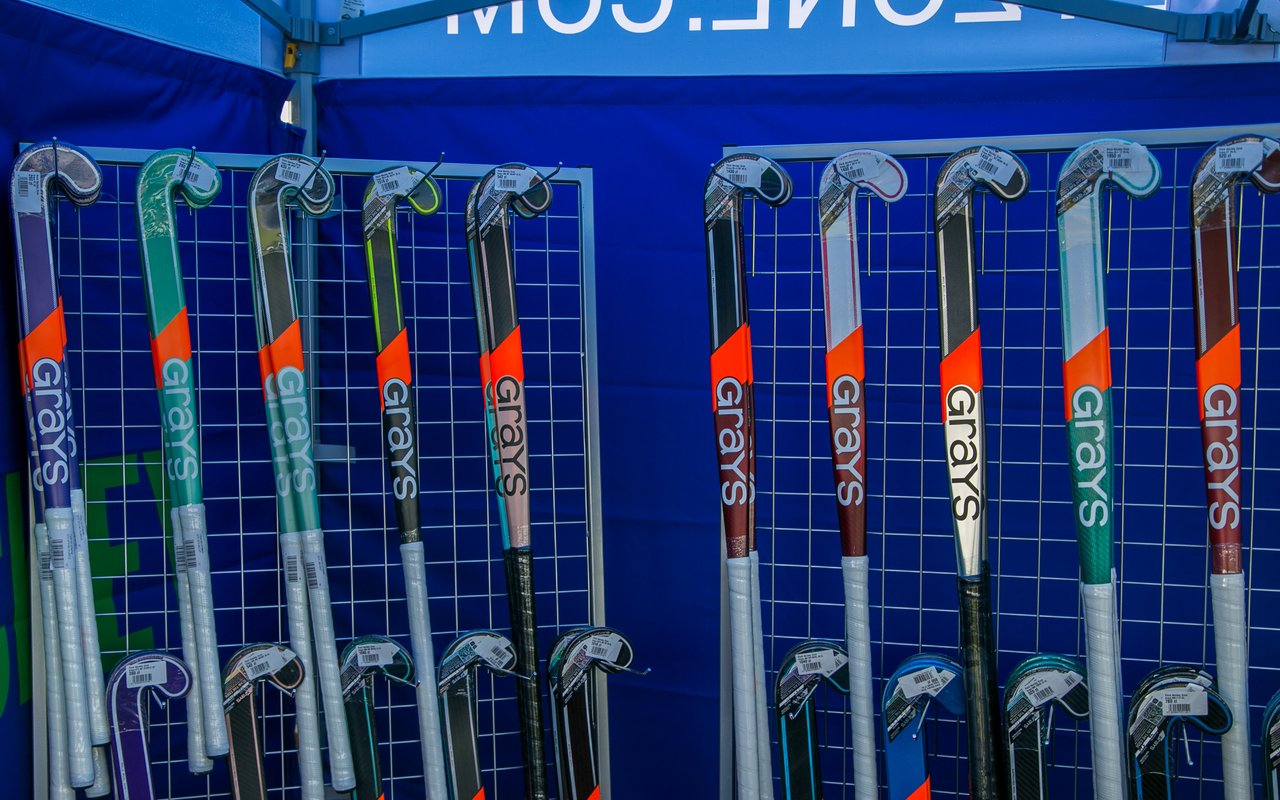
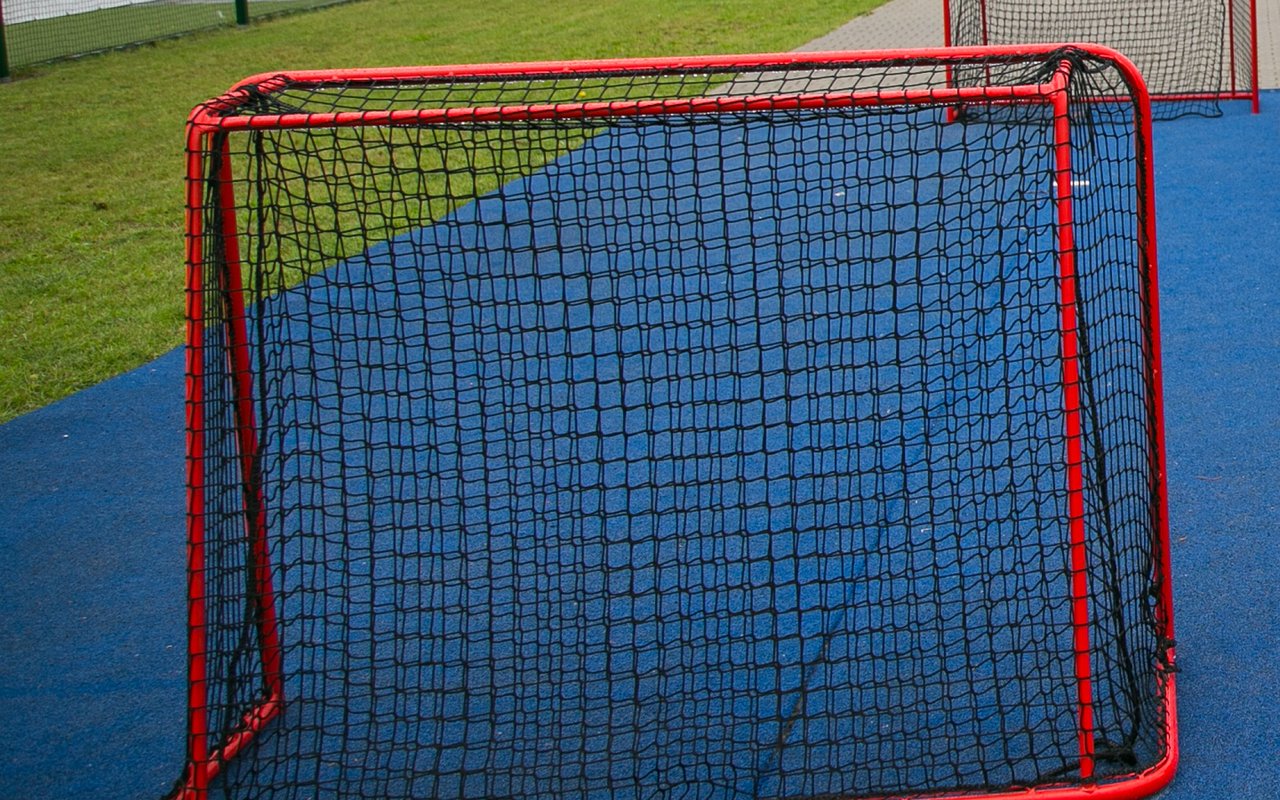
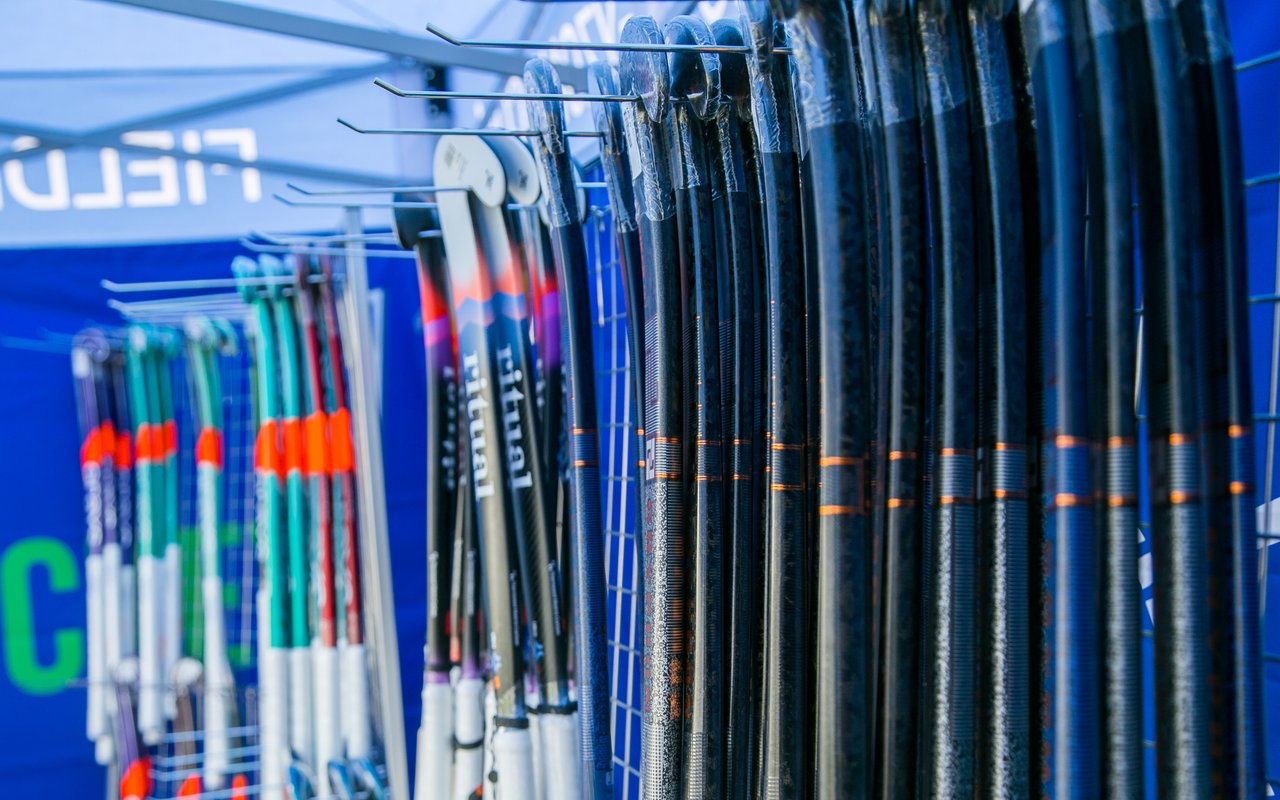
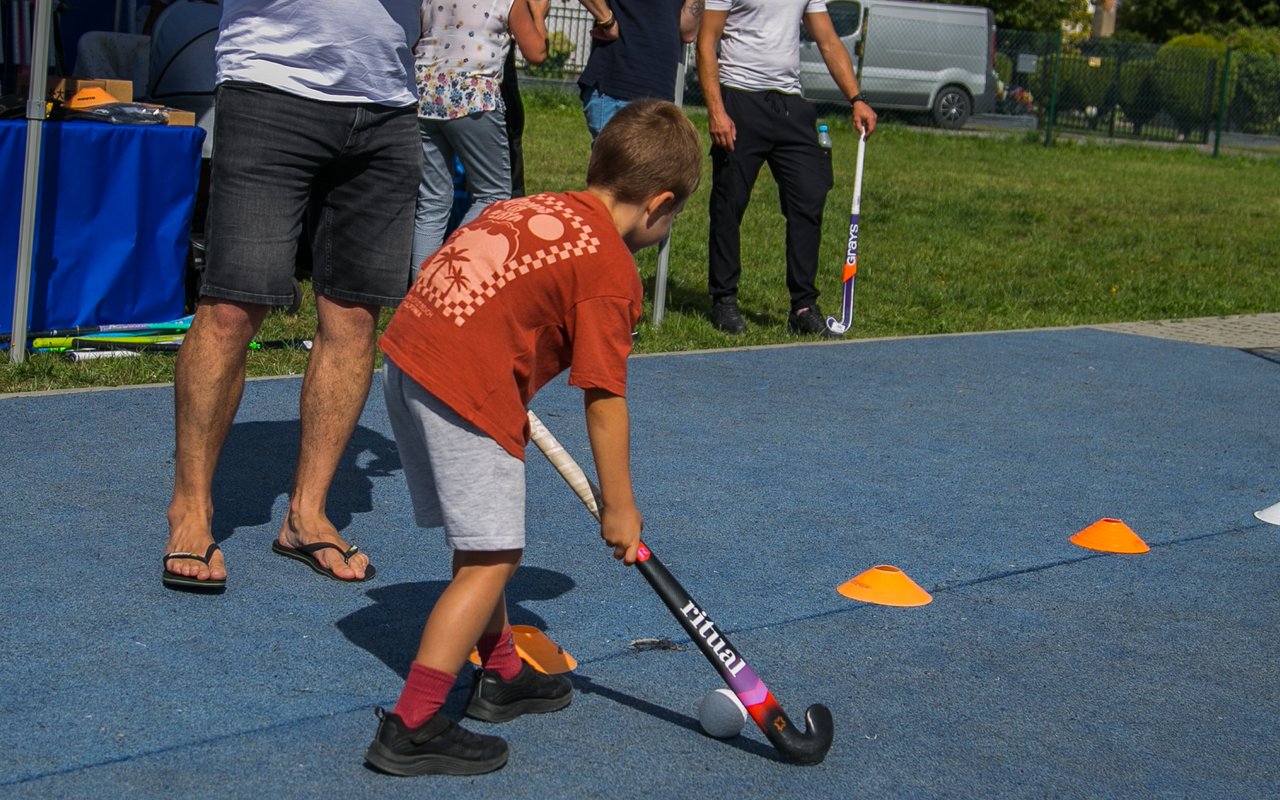
The online shop launched on the Friday before the tournament, and for both days of the Memorial a blue tent with fieldhockeyzone.com written on it stood beside the LKS Rogowo pitch. Sticks hung on the grid racks: the photos show, among others, purple, green and orange Grays models and black Ritual sticks, with Naked accessories and balls on the table. Next to the tent lay our own 6 × 9 m pitch with an artificial surface, a goal and cones, where the contests ran for two days.
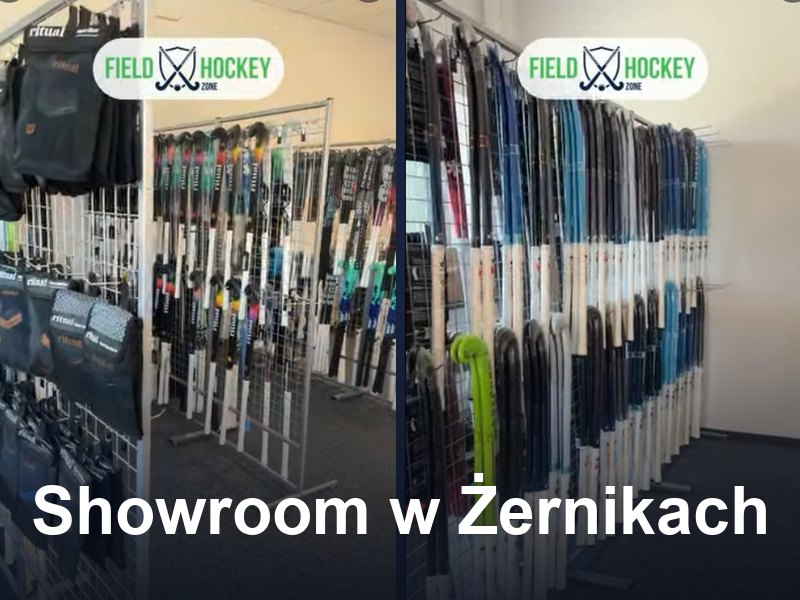
The idea was simple: a stick has to be held in the hand. At the rack you could compare lengths, check the bow and feel the difference between a stick with a low and a high carbon content, then ask about choosing one for age, height and style of play. We apply the same rule after the tournament in our showroom in Żerniki, where by appointment you can compare several models side by side.
Children’s contests on the 6 × 9 pitch
For both days the pitch beside the tent was the place for the children’s contests. The stand’s programme provided for four age categories, 5–7, 8–10, 11–13 and 14 and over, so that a ten-year-old did not compete against a sixteen-year-old, and six events.
- Sniper – five shots at targets in the corners of the goal, points for hits, for all categories.
- Timed slalom – eight poles there and back against the stopwatch, from age 8; a mini version with four poles for the youngest.
- Ball race – to a cone and back, two children at a time, for ages 5–7.
- Three metres – three attempts to hit an empty goal from three metres, for ages 5–7.
- Keepy-uppy – how many times the ball can be bounced on the stick without dropping it, from age 11.
- Duel with a player – three shots at a goal defended by a league player, from age 10.
The programme provided for prizes in the form of small items from the shop’s range that a child will use in training: grips, tapes, balls, bottles, and in the 5–7 category a prize for every participant, because at that stage the point is for the child to want to come back to training, not the competition. There was also cold water and stickers for visitors.
What each event trains and how to repeat it in the garden
The events on the stand were not random: each corresponds to one element a coach works on with children in training. They can be repeated in the garden or on the pitch by the school, keeping to the rules: the child practises in shin guards, with a soft or training ball, supervised by an adult, and any play that lifts the ball only in training with a coach.
- Sniper trains the accuracy of the push. At home two cones or bottles set up as a goal and five balls from a few metres away are enough; what counts is hitting the chosen corner, not power.
- Slalom trains carrying the ball on both sides of the body, turning the stick between forehand and backhand. Four to eight poles or cones in a line two steps apart, the ball at the head of the stick the whole time, without knocking it far ahead.
- Ball race trains carrying the ball at a run and stopping it at the turn. A cone ten steps away, run with the ball there and back; for the youngest the key thing is stopping the ball before the cone, not the time.
- Three metres trains the first push at goal from a standing position: ball still, stick at the ball, push without a backswing.
- Keepy-uppy trains the feel of the ball on the flat side of the head. This is an exercise for training with a coach, because the ball goes up; at home it is replaced by switching the ball from forehand to backhand on the spot.
Six exercises with stick and ball for the garden, together with the safety rules, are described in the post on training at home and in the garden.
Autograph session, stick draw and club stickers
Besides the contests, the stand had three fixed items on its programme. The first was an autograph session with a player, announced in advance and held at the tent; the photos show signed shirts and joint photos. The second was the stick draw on Sunday at 15:00 among those present at the stand, announced in the programme and in our preview of the tournament. The third was stickers: besides stickers with the shop logo we prepared a club series with club crests, because a sticker with your own club’s crest ends up on a stick, not in the bin.
What the players’ kit shows
Two days of senior matches are a good chance to look at what league players use. A few things recur in the photos from the pitch.
Sticks with a low bow and socks over shin guards
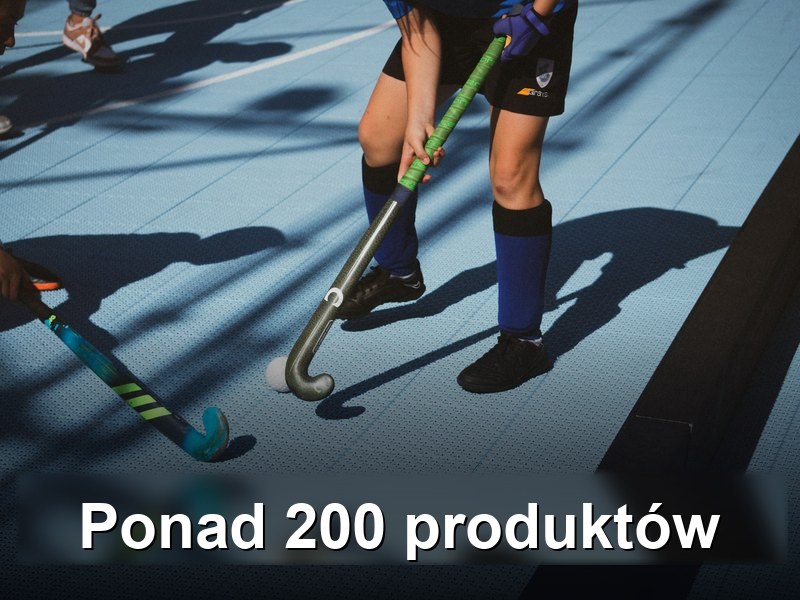
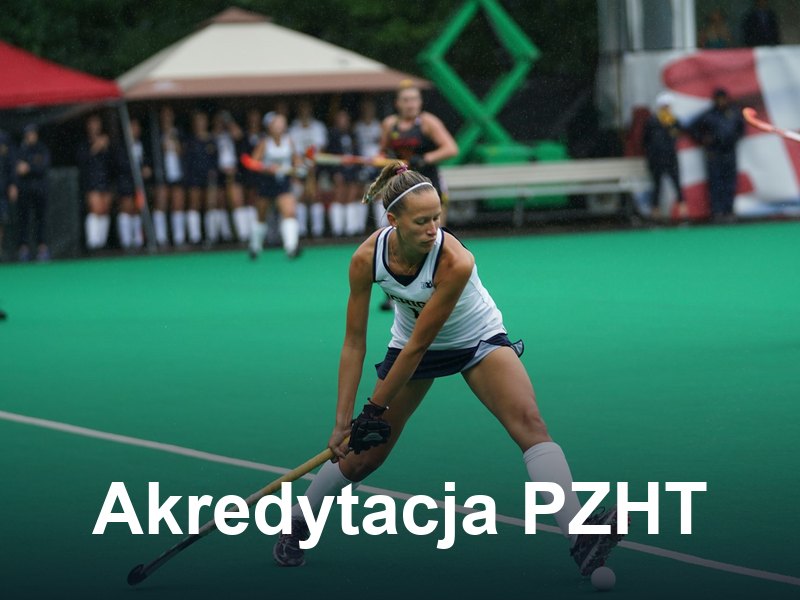
Field players use composite sticks, with the head at the ball and the handle low over the turf when carrying. When tackling, the left hand is just above the surface, which is why some players can be seen wearing a glove on the left hand. Players wear shin guards under their socks: the photos show their shape under the sock and, in low lunges, the edge of the guard above the shoe. The FIH rules recommend protection for shins, ankles and teeth, and any obligation in a given competition comes from its regulations. The shin guards and gloves we have in the shop are in the category field hockey protection.
Shoes for artificial turf
The pitch in Rogowo has an artificial surface, and the players wear shoes with soles made for such turf. The photos of lunges and turns show how much grip matters: the player gets low, shifts their weight onto the outside foot and changes direction in a single step. How a turf shoe differs from an indoor shoe and from football boots for artificial grass is described in a separate post on hockey shoes.
Goalkeeper in full kit
The goalkeepers in Rogowo played in full kit: a helmet with a grille, leg guards, kickers over the shoes, hand protectors, a chest guard and protective pants under a bright shirt that sets the goalkeeper apart from the field players. A goalkeeper kit is put together in a set order, from helmet and leg guards to the rest. In our range these items come from TK and are divided into three lines: TK1, TK2 and TK3. The leg guards are the TK1 Soft Legguards, TK2 Legguards and TK3 Legguards, the kickers are the TK1 Soft Kickers, TK2 Kickers and TK3 Kickers, and hand protectors come separately for the left and right hand (TK1 and TK2 Hand Protector Left and Right) or as the TK3 Glove Set. Then there is the TK Goalie Mask Performance helmet and the smaller TK Junior Goalie Mask, chest and shoulder guards, elbow guards, an abdominal guard, goalkeeper pants and the TK3 Neck Protector. How to choose the sizes of these items we describe in a separate post this week; the models in our range are in the category hockey goalkeeping kit.
Kit for a child after their first contest
In the contest photos the children play with junior sticks; the models listed below come in lengths from 28 to 35 inches. If after Rogowo a child wants to go to training, the starter kit is short: a stick in a length matched to their height, shin guards in a small size and a ball for practising at home. The model data comes from the product pages in our shop as of October 2026; check the product page for current lengths, sizes and colours.
- Junior outdoor sticks for starters – Osaka Pro Tour GF 2.0 Grow Bow Junior (28, 30 and 34 inches; 95% fibreglass and 5% kevlar, Grow Bow with a depth of 17 mm), Naked Genesis Jr (28, 30 and 32 inches; fibreglass with around 10% carbon), Naked Prodigy 15 Jr (30, 32 and 34 inches; 15% carbon), as well as TK F Jr Control Bow (32–35 inches, Control Bow profile) and TK Maxi (33 and 35 inches, a stick for training and recreational play), for which the product page gives no composition.
- Junior sticks with a higher carbon content – Ritual Velocity 25 (32 and 34 inches; 25% carbon, 70% fibreglass, 5% aramid, low/mid bow 24 mm) and Naked Supreme Jr (32 and 34 inches; 30% carbon, low bow profile). According to the product pages, the Velocity 25 is for players starting to play on grass and indoors and juniors moving up from children’s models, and the Supreme Jr for a junior developing low-bow technique, as a step between an entry-level and a senior stick.
- Shin guards in small sizes – Grays Shield Shinguard (2XS, XS, S; according to the product page for beginners and recreation) and Grays G600 Shinguard (from 2XS to L). The size is chosen by shin length, according to the manufacturer’s table.
- Balls for practice – TK Soft Ball to begin with at home and in the garden, TK Dimple Ball and TK Club Ball for the pitch.
The rule from the rack in Rogowo applies to buying online too: stick length is chosen for the child’s height now, not next year, and between two sizes the deciding factor is the stance with the stick in hand. How to measure it, we described in a separate post on choosing stick length for children and adults.
How this translates into choosing kit
From the photos of the pitch and the stand and from the contest programme come a few observations that will help parents and players before a purchase.
- Stick length is checked in the hand, not in a table. At the rack a stick could be held up against the child standing beside it and two lengths compared in the playing position. Two sticks one size apart sit completely differently in the hand, which the product page cannot show.
- A child in a contest plays with the stick they have, not the one they dream of. In the contest photos the children play with sticks of various lengths; a stick that is too long can force the child to straighten up over the ball, and one that is too short can force excessive bending. It is the same conclusion we repeat in our guides on choosing length.
- A child does not have to start with a senior stick. The sticks for advanced players in our range have, according to the manufacturers’ product pages, low profiles for lifting the ball and the drag flick. For a child learning to receive and pass, manufacturers point to more all-round profiles and a lower carbon content.
- Shin guards and a glove are standard on a league pitch. In the match photos there is no player without shin guards; some players wore a glove on the left hand. Before the season it is worth checking what the regulations of the competition your child plays in require.
- A goalkeeper needs the full set, not individual pieces. Helmet, leg guards and kickers work together; a missing element shows immediately at a low shot.
What remains after Rogowo
The Memorial was the debut of our stand at a tournament. The topics from the stand, choosing a stick for a child’s height and starter kit, have returned since then in the guides on this blog, from choosing stick length to putting together a goalkeeper kit. We use the tournament photos in the shop and in our materials, with no children’s faces.
In autumn the game moves indoors, but outdoor and indoor sticks, protection and goalkeeping kit from the same brands that stood on the racks in Rogowo are in the shop all year round. If you want to hold a stick in your hand as you could at the stand, write to us and arrange a visit to the showroom in Żerniki. All the models can be found in the category outdoor and indoor hockey sticks.