

Blog
Field hockey shoes – Osaka Furo and Furo Court: the sole for the surface, sizes and care

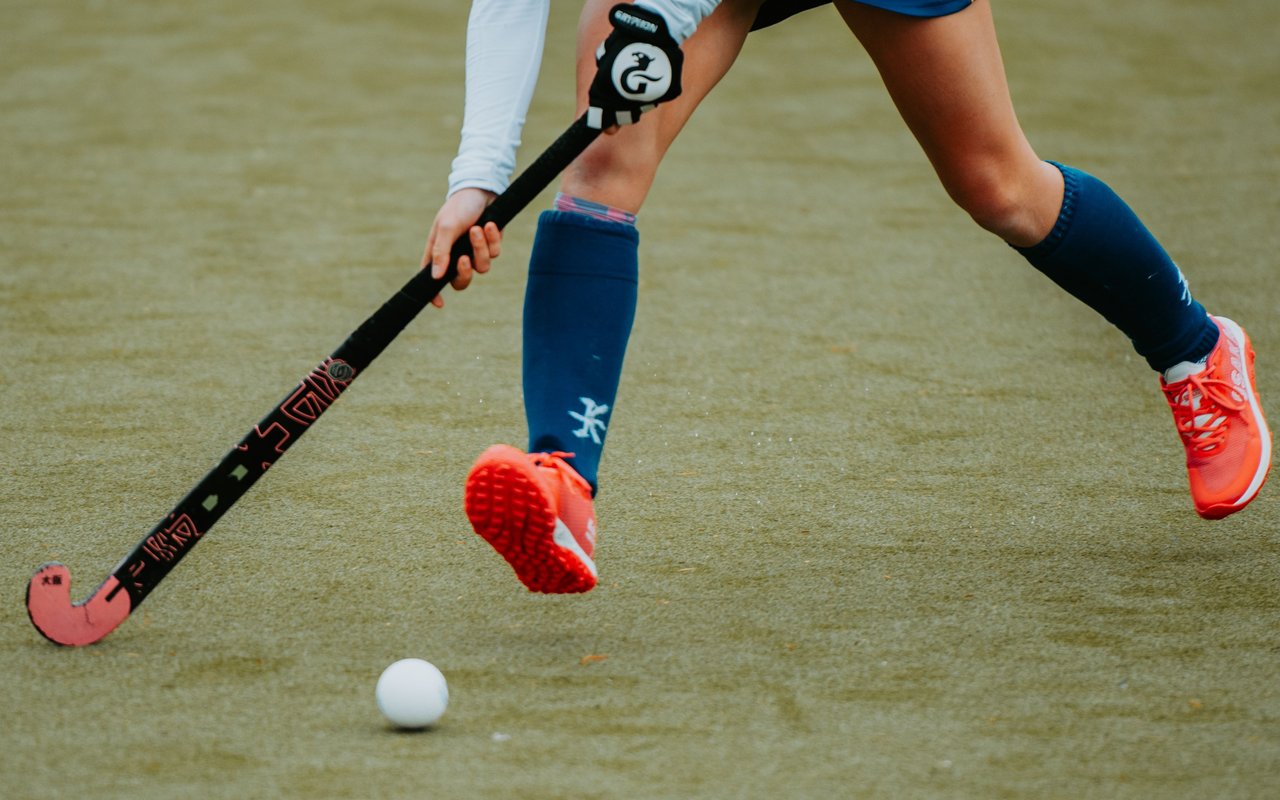
This is a follow-up to the post Hockey shoes: turf or indoor?. That article explains why football boots are not suited to short artificial turf, how turf shoes differ from indoor shoes and why an AG marking is no substitute for checking a specific model. Here we go further: we show which FIH-certified surfaces field hockey is played on, how to read a shoe’s product page, how Osaka Furo and Osaka Furo Court from our range differ, how to choose a size in a range with half sizes, what to check after the first training sessions, how to look after the shoes and when to replace them.
Shoe data comes from the product pages in our shop as of October 2026, and prices from the product list on 27 October 2026. Check current sizes and prices on the product page.
How to read a shoe’s product page
Shoe product pages in our shop have four fields that settle the choice before you look at the photo:
- Variant – Outdoor for Osaka Furo, Indoor for Osaka Furo Court, both markings for the Osaka Sliders slides. This field tells you which surface the manufacturer intends the shoe for.
- Composition – a description of the sole and upper: for Furo “a sole with a highly abrasion-resistant stud system”, for Furo Court “an upper with a full spandex bootie insert, a reinforced toe; a herringbone sole”, for Sliders “a moulded sole”.
- Size – the list of sizes on the product page; in the October data both shoe models had sizes from 36.5 to 44, but Furo Court has a longer list in the shop than Furo, and the slides a shorter one. The list on the page is the catalogue range; the availability of a specific variant is shown only by the product page itself.
- Colour – in the October data both shoe models were white and the slides black; the product pages in the shop also carry other colourways. With indoor shoes, however, what counts is whether the sole is non-marking, not the colour of the upper.
The FIH Rules of Hockey do not specify the type of footwear for field players. What you may wear is decided by the venue rules and the competition regulations, and what works is decided by the surface.
What field hockey is played on
Despite the name, field hockey is played today on artificial surfaces. The FIH runs a quality programme which, since 2021, classifies turf surfaces separately (classes from Global to Community 3G Multi-Sport) and certifies fields separately (categories 1 to 5 plus an innovation category for dry-turf fields). For a player, three types of ground matter: water-based artificial turf, sand-dressed or sand-filled turf, that is with a layer of sand in the lower part of the fibre or filled with sand, and an indoor hall with parquet or another smooth, hard floor, where the indoor season is played.
This has a practical bearing on the choice of shoes. Osaka describes the Furo model as intended for water-based artificial surfaces and sand-based pitches, that is the first two types of ground described above. On a multi-sport field or any other surface, check the venue’s rules before choosing footwear.
Each of these surfaces behaves differently. A water-based pitch is wet, on a sand-dressed one sand from the pile gets onto the sole and into the shoes, and a wooden floor needs a sole that grips a smooth surface and leaves no marks on it. So before you buy shoes, check which pitch you will be training on in the coming months. We described the differences between outdoor and indoor hockey in more detail in the post outdoor or indoor.
In short, from the first part: for short hockey turf, hockey shoes or turf shoes with a fine rubber tread; for indoor, a flat, non-marking sole; FG and SG football boots stay at home, and an AG marking is no substitute for checking the model and the venue’s regulations. Here we look at how this plays out in two specific models.
What to check in a hockey shoe
Field hockey is played bent over, with the stick at ground level, with lots of side steps, lunges and stops. You do not need specialist knowledge to assess a shoe in your hand and on your foot. When choosing, look at a few things:
- Sole – whether it is intended for your surface: a fine tread for turf or a flat, non-marking sole for indoors.
- Heel – whether it holds the foot securely and does not slip out when you go up on your toes.
- Sides of the upper – whether the foot slides in the shoe or goes over the edge of the sole when you step sideways.
- Toe – whether your toes have room and whether the front of the shoe flexes in a way that squeezes them in a low lunge.
- Inside – whether the seams and insole rub; in models with a bootie, check that the inner sock does not wrinkle over the instep.
- Lacing – whether you can tighten the shoe over the midfoot without pressing on the instep.
Lacing that holds the foot
How you lace a shoe affects how it holds your foot. Start with loose laces, slide your foot in, push your heel to the back of the shoe and tighten the laces from the bottom up, evenly, without squeezing the instep. If the shoe has extra top eyelets, using them helps hold the heel better. Tie the laces so the ends are not long and do not catch on the stick or the laces of the other shoe. After the warm-up, check the lacing again, because your feet warm up and laces can loosen.
Field hockey shoes in our range
In the footwear category we have three Osaka products: shoes for turf, shoes for indoor and slides. Both shoe models cost PLN 349; the size lists on their product pages are similar but not identical, as explained below.
Osaka Furo – for artificial turf
Osaka Furo is a field hockey shoe for water-based artificial surfaces and sand-based pitches, marked Outdoor in the data. According to the manufacturer’s description it has a highly abrasion-resistant stud system that gives grip when accelerating and changing direction, an inner bootie that wraps the foot and adapts to different foot shapes, and a light construction. In the October data: white, sizes 36.5 to 44; PLN 349. Check the product page for the current variants.
Osaka Furo Court – for indoors
Osaka Furo Court is an indoor shoe for hockey players and players of other indoor sports, marked Indoor. The manufacturer intends it for smooth, hard floors, in a sports hall and on parquet. The sole has a herringbone tread which, according to the description, holds the floor in quick turns and sudden stops. The upper has a full spandex bootie insert that fits the shoe like a sock, and a reinforced toe protecting the tip during intensive play. In the October data: white, sizes 36.5 to 44; the product page in the shop now has a longer size list than Furo, including half sizes above 42, and other colours, so check the page for the current variants. Price PLN 349.
Osaka Sliders – after training
The Osaka Sliders are black sliders with a moulded sole, to wear after training and matches, on the way to and from the pitch, at the gym or the pool. They are not playing footwear. Sizes 37, 42, 43 and 44, price PLN 75.
The manufacturer describes them as lightweight footwear for changing into after playing, with a sole that gives grip and comfort on wet and smooth surfaces, such as the changing room, the shower and the pool. In practice, sliders let you take off your playing shoes straight after a match rather than travelling home in them. The slider size range is narrower than for playing shoes: 37 and 42 to 44, so before buying check on the product page whether your size is available.
| Model | Intended use per product page | Sole and upper per product page | Sizes | Price on 27.10.2026 |
|---|---|---|---|---|
| Osaka Furo | water-based and sand-dressed artificial turf (Outdoor) | abrasion-resistant stud system, inner bootie | 36.5–44 | PLN 349 |
| Osaka Furo Court | hall, wooden floors, smooth hard floors (Indoor) | herringbone tread, spandex bootie, reinforced toe | 36.5–44 in the October data, more sizes on the product page | PLN 349 |
| Osaka Sliders | sliders for after training | moulded sole | 37, 42, 43, 44 | PLN 75 |
The tread in practice
The descriptions of both models say what the tread is for, and simple everyday tips follow from that. On the Furo, Osaka highlights the abrasion resistance of the stud system, which matters on sand-dressed surfaces, where sand works between the pile and the sole. Check the sole after a few sessions: even wear is normal, while smooth patches under the forefoot, which does the work during turns, are a sign that grip may be weakening. On the Furo Court, the herringbone tread is meant to grip a smooth, hard floor during turns and stops, and it works best on a clean surface. If the floor is dusty or the sole has picked up dirt, wipe it with a damp cloth before the match.
How to choose the size of hockey shoes
In the October 2026 data both models had sizes 36.5, 37.5, 38, 38.5, 39, 40, 41, 42, 43 and 44; Furo Court now also has additional sizes on its product page in the shop, including half sizes above 42. Manufacturers’ size charts differ, so before buying compare your foot length with the manufacturer’s chart, not just with the size of the shoes you wear every day.
Measuring and trying on
- Measure your foot in a playing sock, ideally after training or at the end of the day.
- Stand on a sheet of paper against a wall, heel to the wall, mark the end of your longest toe and measure the distance. Measure both feet and go by the longer one.
- Try shoes on in the socks you play in. Playing socks and hockey socks can be thicker than everyday ones.
- Leave a little room in front of your toes: the foot works when running and braking, and your toes should not hit the toe of the shoe.
- Check the heel: it should not slip out of the shoe when you go up on your toes or in a low lunge.
- Take a few side steps and a short turn. The shoe should hold the foot without squeezing the midfoot.
Half sizes
In the October data the lower part of both models’ size range had half sizes: 36.5, 37.5 and 38.5, with full sizes from 39 to 44; Furo Court also has half sizes above 42 on its product page. If your foot falls between two sizes, try both on in your playing socks and choose the one in which the heel sits firmly and the toes do not hit the toe box. Osaka Sliders have sizes 37, 42, 43 and 44 on their product page, so the choice is narrower, but slides do not need as precise a fit as playing shoes.
Furo and Furo Court have similar size lists, with Court’s the longer, so a size chosen in one model is a starting point when buying the other, not a guarantee. The uppers also differ inside, and in Furo Court the spandex bootie, according to the description, fits the shoe like a sock, so try the second pair on too. Write down your foot length in centimetres and the size that fitted. At the next purchase, including for a growing child, you then have something to compare with the manufacturer’s chart.
Both Osaka models have an inner bootie which, according to the description, adapts to the shape of the foot. With this kind of construction, trying them on matters more than the number itself, because the bootie changes how the shoe wraps the foot.
Shoes for children
Osaka Furo sizes in the October data start at 36.5, and Furo Court also has 35.5 on its product page, so a younger child who wears smaller shoes needs a different model chosen by the same rules: a sole for the surface, a clean non-marking sole for indoor, trying on in playing socks. A child’s foot grows, so shoes are treated as seasonal kit and tried on before each season. Shoes that are too big are no saving if the foot slides in them at every turn.
One pair for outdoor and indoor
The temptation is understandable: one pair of shoes for the whole year. Turf and hall floors, however, make different demands on the sole: a fine tread for artificial turf and a flat, non-marking sole for wooden floors. On top of that, a hall requires clean footwear, and shoes worn on a sand-dressed pitch bring in sand and dirt. The venue rules may explicitly prohibit going onto the floor in footwear used outdoors.
That is why in our range the Osaka Furo and Osaka Furo Court are labelled separately: the first as Outdoor, the second as Indoor. If you start playing in autumn, when training moves indoors, your first pair can be indoor shoes, and you can buy turf shoes before returning to the pitch.
Shoes and the rest of your leg kit
A shoe works together with socks and shin guards. Socks hold the shin guard on the leg, and the shin guard ends above the ankle, so trying shoes on with shin guards in place shows whether anything rubs around the ankle. The FIH rules recommend that field players wear shin and ankle protection. We have described separately how to choose shin guards and what matters in them, and you will find Grays, Gryphon and Osaka models in the category shin guards and protection.
If the shin guard has ankle protection, like Osaka Shinguard and Osaka Keigo Shinguard from our range, which the manufacturer describes as protecting the shin and ankle, try the shoes on with that specific shin guard: the lower edge of the guard must not slip under the shoe’s collar or press on the ankle in a low lunge.
A field hockey ball is hard: the FIH rules set its weight at 156–163 g. A shoe is not a protector and does not protect the foot from being hit by the ball, but a reinforced toe, as on the Osaka Furo Court, protects the tip of the shoe during intensive play. The foot guard in our range, the TK Elite Foot Guard, is intended for goalkeepers.
We wrote about socks and layers for autumn training in the post on how to dress for hockey training in autumn. It is worth choosing your socks to go with your shoes and then trying the size on in them.
Goalkeepers’ shoes
A goalkeeper wears foot protectors called kickers over their shoes, so the shoes are chosen together with them. Try the kickers on over the shoes the goalkeeper plays in, and check that the straps fasten properly and the shoe does not slip out from under the protector. The surface rules are the same: footwear for artificial turf outdoors, clean shoes with a non-marking sole indoors. Kickers and the rest of the goalkeeping kit are a separate topic that depends on the player’s size and position.
The season in Poland: which shoes when
In Poland, hockey is played on turf in spring and autumn and indoors in winter. Before the indoor season, check the condition of your indoor shoes after the break: whether the sole is clean and has not stiffened, whether it is coming away from the upper, and whether a child’s foot has grown. Before returning to the pitch, do the same with your turf shoes.
How much footwear for a season costs
At the prices in our shop on 27 October 2026:
- turf only – Osaka Furo, PLN 349,
- indoor only – Osaka Furo Court, PLN 349,
- turf and indoor – both pairs, PLN 698,
- after training – Osaka Sliders, PLN 75.
On top of that come the socks your club plays in and possibly a backpack with room for footwear.
The first training sessions in new shoes
New hockey shoes are judged after two or three training sessions, not after trying them on at home. Before the first time on the pitch and afterwards, check:
- Heel and Achilles tendon – whether the heel counter rubs; chafing after the first session is a signal to adjust the lacing and socks before deciding the size is wrong.
- Midfoot – whether nothing goes numb once the laces are tightened; in models with a bootie, the inner sock should not wrinkle over the instep.
- Fingers – whether they hit the toe box when braking and in a low lunge. If they do, the shoe is too short, not “not yet broken in”.
- Sole – after training on sand-dressed turf look at the Furo studs, and after an indoor session at the Furo Court tread: wear should be even, with no clearly worn-down patches.
- Cleanliness – an indoor shoe that has once been out to the car park picks up sand and dirt; you go back onto the floor in it only after cleaning the sole.
If after three sessions the shoe still rubs in the same place despite changing the lacing and socks, go back to measuring the foot and the manufacturer’s chart. If in doubt about the size, you can also try both Osaka models on in our showroom in Żerniki by prior appointment.
Looking after your shoes
Hockey shoes work on wet turf, in sand or on dust from the hall floor. A few rules help keep them in good condition through the season:
- After training on turf knock out the sand and remove dirt from the sole before it dries.
- Dry them at room temperature, with the insole removed if it comes out, and the laces loosened. Radiators and hair dryers can deform the upper and the glue.
- Do not wash them in a washing machine, unless the manufacturer allows it. Wipe the upper with a damp cloth.
- Wear indoor shoes only indoors. A sole that does not pick up dirt from the street and the pitch more easily meets the requirement for clean footwear in the hall.
- Carry shoes separately, in a bag or a backpack compartment, so the wet sole does not dirty the rest of your kit.
- Out of season keep the shoes you are not using clean and dry in an airy place, not in a closed bag with damp kit. Stuff slightly damp shoes with paper.
According to its description, the TK6 Backpack holds clothing, footwear and accessories (PLN 195). You will find backpacks and bags in the category Bags and Backpacks. We wrote more about washing and drying your whole kit in the post on washing, drying and storing hockey kit.
When to replace shoes
Replacement depends on condition and fit, not on the purchase date. Signs that a shoe needs assessing or replacing:
- a tread worn smooth where the foot works during turns,
- a sole coming away from the upper,
- a cracked upper or toe,
- a heel that no longer holds the foot,
- for a child – a shoe that has become too small.
A worn removable insole can be replaced without throwing the shoe away. If the sole or heel is damaged, do not return to play until you have established whether the footwear is fit for further use.
Mistakes when choosing hockey shoes
- Sole colour as the criterion. What counts is whether the sole is non-marking, not whether it is light-coloured.
- Trying them on in thin socks. Fit shoes in the socks you play in.
- Shoes to grow into for a child. A foot sliding in the shoe during turns means less control over movement.
- Warming up in sliders. Sliders, like the Osaka Sliders, are for the way to the changing room and after training, not for the pitch.
Questions before buying shoes
- What turf do you train on? The Osaka Furo is described as a shoe for water-based and sand-dressed surfaces. For other surfaces, check the venue rules.
- Is indoor footwear required in the hall? Ask at the club or check the venue rules.
- What is your foot size in centimetres? Measuring against a wall and the manufacturer’s chart give a more reliable result than the size of your other shoes.
If you are unsure about the size or do not know which model to choose for your pitch, write to us. You will find the Osaka Furo, Osaka Furo Court and Osaka Sliders in the category field hockey and indoor hockey shoes.
Photo: Luke Miller / Pexels