

Blog
Injuries in indoor hockey – risky situations and protection

Indoors changes the game more than simply putting a roof over your head would suggest. The pitch is smaller, the ball bounces off the side-boards and comes back instead of going out of play, and the surface is hard and completely different from turf. On top of that come a denser arrangement of players and less time to decide. This is not about scaring anyone, but about knowing in which situations the risk of injury rises and what can be done in advance.
Why indoors is different from outdoors
Three things change the conditions of play. First, the surface: a hard floor behaves differently in a fall and when braking than watered turf, so footwear and technique have to be adapted to the hall. Second, the side-boards: the ball and the player stop against a rigid obstacle rather than in the open space beyond the line. Third, distances: indoors the opponent is closer, and so is the opponent's stick, so you have to be prepared for stick contact with the hand or shin throughout the match.
Indoors a different set of permitted skills applies than outdoors, including restrictions on hitting. We gathered them in the post on indoor hockey rules and they are worth knowing, because some of the rules were written precisely to limit the risk.
Hands and fingers
A typical situation looks like this: a player carries the ball close to the foot, an opponent comes in with the stick from the side and hits the hand on the shaft. In tight play this also happens without any bad intention; whether it was a foul is decided by the umpire, not by the force of the blow. The consequences can be out of proportion to that force, because the fingers on the shaft have no natural protection at all.
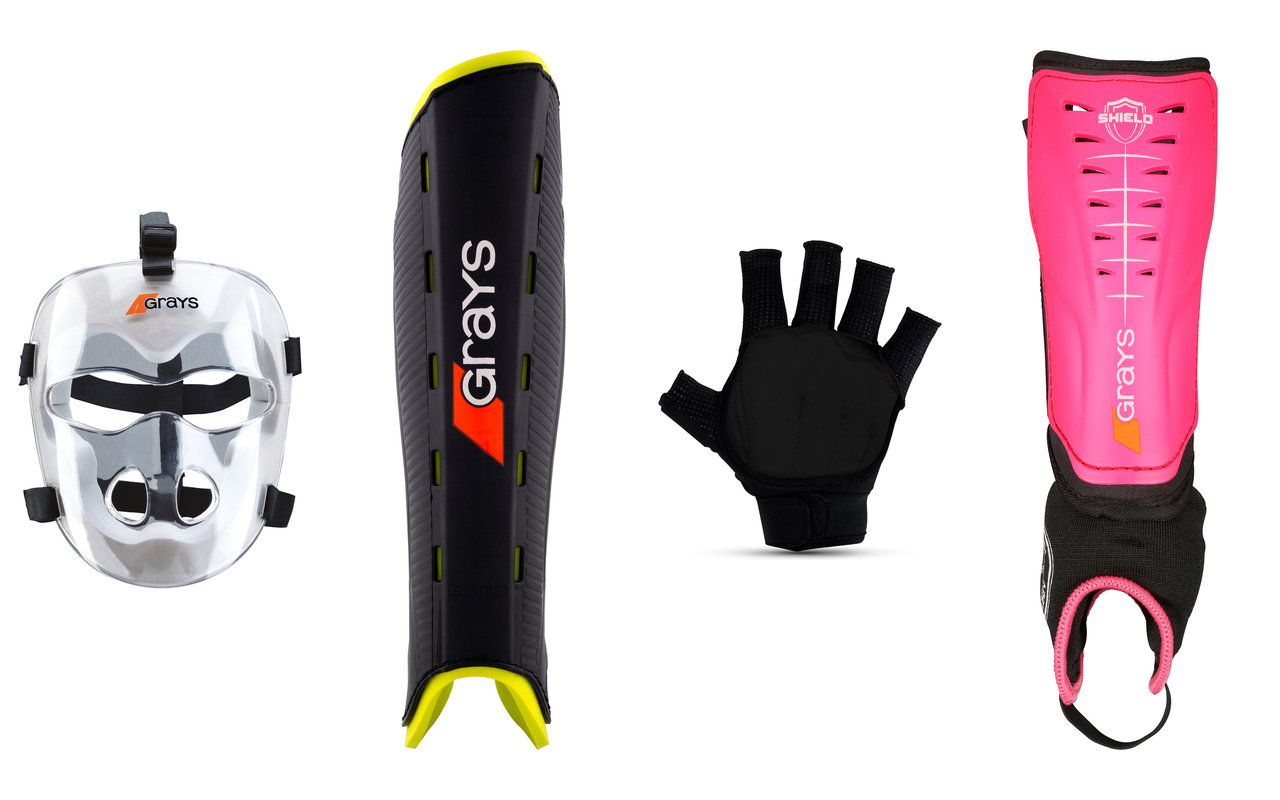
There are two practical answers. The first is well-chosen hand protection. In the basic grip the left hand holds the stick at the top and the right hand lower down; which hand ends up closest to the floor depends on the skill, for example in a low block the stick lies almost flat. Which hand the field player glove goes on, when and in what size, we cover in the post on the field player glove. The second is tackling and defending technique practised with the coach, matched to the specific skill and set-up.
Shins, feet and ankle
Indoors the ball travels low, because lifting it is permitted only in specific situations. That means the shins and feet are in the line of fire practically the whole match. Shin guards here are not a comfort option but a basic item of equipment, and their condition and fit matter: a guard that slides down during play protects only wherever it happens to be. We described the selection criteria in the post on shin guards and mouthguards.
A separate topic is the sharp turns and stops, of which there are many indoors. Choose footwear to suit the surface and the requirements of the specific hall, and agree the warm-up and change-of-direction drills with the coach; they reduce the risk but do not eliminate it. You will find a general warm-up routine in the post warm-up before training and matches.
Face and teeth when defending the penalty corner
Defending a penalty corner is the moment when a player deliberately runs towards the shot. Indoors the distance is shorter than outdoors, so there is less time to react. Hence the face mask in this situation, and hence the mouthguard as standard, and in many competitions a regulatory requirement. The positioning of defenders indoors is described in the post on indoor hockey rules.
An important practical note: the mask must not shift or restrict your vision. Before defending a corner, adjust its fit and fastening, and if it cannot be put on properly, use a sound, properly fitted mask.
Back and overload
Field hockey is played bent forward, with the stick at the ground. Indoors this position lasts longer, because there is less running over longer distances and more play in tight spaces. Holding a bent posture for a long time can be demanding, especially when the stick is the wrong size and forces you to hunch.
What you can do in advance: check the size of the stick, and discuss adjusting the training load and breaks with the coach. Do not diagnose pain from a guide: persistent or worsening symptoms call for a medical consultation, not another exercise from the internet.
Situation, equipment, habit
| Situation indoors | Equipment that helps | Habit that helps |
|---|---|---|
| Contesting the ball at the side-board | a well-fitted field player glove | tackling technique practised with the coach |
| Shot and low-flying ball | shin guards of the right size | guards that stay in the right place |
| Defending the penalty corner | face mask, mouthguard | mask fitted and fastened before running out |
| Sharp change of direction | footwear suited to the hall surface | warm-up and turns agreed with the coach |
| Long spells of play bent forward | stick chosen by height | load and breaks agreed with the coach |
When to stop playing
There is no room for home diagnoses here. A blow to the head, loss of feeling in the fingers, swelling that builds up within minutes, pain that makes it impossible to put weight on the leg are situations in which training ends and the player receives medical help; if concussion is suspected, they do not return to play the same day. The return to play after such an event is decided by a medically qualified person, not by the fixture list. Protective equipment reduces the risk but does not remove it, and it is no substitute for the decision to stop playing.
If the pre-season check showed damage to shin guards or the mask, the protection does not stay in place, or the manufacturer already recommends replacing it, sort it out before the first indoor match. You will find the whole range of protection in the category protection.