
Blog
Stick bow: low, mid, standard — what it really means

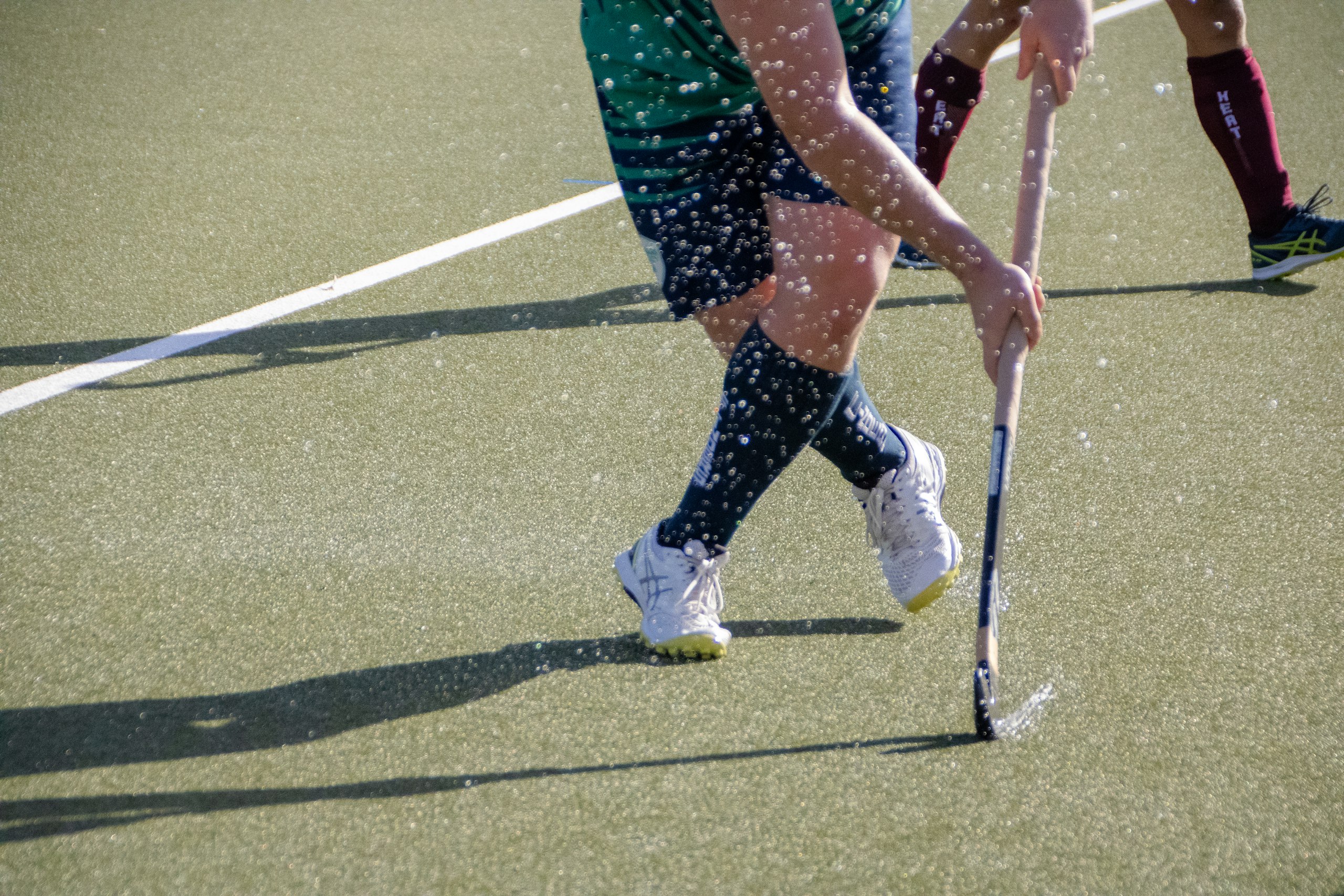
When choosing a field hockey stick, two things catch the eye right away: length and price. The third — the bow — is less obvious, yet it is what most defines how a stick behaves in play. In this post we explain how a low bow differs from a mid bow, who each profile serves and how not to buy a stick you are not ready for.
What is the bow, anyway?
Lay a stick flat on the floor and you will see the shaft is not straight — it has a gentle curve. The bow is that curve: its size is given in millimetres (the highest point above the ground), and its character is defined by where the curve is deepest — closer to the middle of the shaft or closer to the head. FIH rules limit the bow to a maximum of 25 mm, so the differences between sticks look small — but you feel them on the pitch immediately.
Mid bow (standard) — the universal middle ground
A bow of around 20–22 mm with its deepest point roughly halfway up the shaft. The stick handles predictably: flat trapping, reliable passing, a controlled shot. It is the best choice for beginners and intermediate players — technique develops faster when the stick does not force corrections.
Low bow — for drag flicks and 3D play
A curve close to the maximum (23–25 mm), positioned low, towards the head. This profile makes lifting the ball, drag flicks, aerial passes and 3D dribbling easier — which is why attackers and set-piece specialists choose it. The price for these abilities: less forgiving trapping and a flat hit that demands better technique. For players who know exactly why they are buying it.
Extra low / pro bow — a variant for specialists
A low bow variant with the curve as low as the rules allow. You will find it in top-shelf sticks designed for drag flickers. If you have to ask whether it is for you — it is not yet, and that is not spite, just the shortest truth about this profile.
How to choose in practice?
- Just starting out or playing recreationally — get a mid bow and keep it simple.
- Playing up front, practising drag flicks or aerials — a low bow will pay off sooner than you think.
- Defending and relying on secure trapping and a strong flat pass — mid bow, possibly a gentle low.
- Buying for a child — always a mid bow; a deep curve only gets in the way of learning the basics.
In our store you will find the bow profile listed for every stick, and in the sticks category you can filter by the Bow attribute — alongside length and material. Have a look at the Hockey Stickscategory, and if you are just starting out, read our guide on how to choose your first stick.
Still not sure which bow suits your game? Drop us a line — we will recommend a specific model for your position and level.
Bardzo przystępnie wytłumaczone! W końcu rozumiem, czym różni się low bow od mid bow. Czekam na więcej takich poradników.