

Blog
Goalkeeper in indoor hockey – what changes in kit, positioning and play

For a field player, moving indoors means giving up hits, keeping the ball on the floor and learning to play off the boards. A goalkeeper has it harder, because almost everything changes at once: the goal, the distances, the type of shots and the time to react. The protective kit stays the same, but it works in different conditions. Below is what differs indoors under the FIH rules, how that translates into positioning in goal and what to do with your kit before the first tournament.
A smaller goal, a smaller pitch, the circle closer
A common myth says the indoor goal is the same size as the outdoor one. The FIH Rules of Indoor Hockey say otherwise: it is 3 metres between the posts and 2 metres from the floor to the cross-bar. Outdoors those dimensions are 3.66 by 2.14 metres. In a low stance a goalkeeper covers more of the goal than on grass, and the move to the post is shorter.
The indoor court is much smaller than an outdoor pitch, the long sides are closed off by boards, and the circle reaches 9 metres from the back-line, whereas outdoors it is over 14 metres. A goalkeeper may take part in play across their whole half, not only in the 23-metre area as outdoors. Outside their own circle, the goalkeeper may play the ball only with the stick.
What kind of shots come indoors
Indoors the ball must not be hit, and it may only be raised off the floor with a shot at goal, which may be lifted to any height as long as it is not dangerous. We gathered all the differences in the post on indoor hockey rules. For a goalkeeper this means that most moves end with a push or a flick from close range, the ball stays flat until the last moment and is only lifted suddenly in the circle, and rebounds off the boards change the angle once the keeper has already set for the shot.
Positioning: lower, closer, shorter steps
The details of positioning are a matter for the coach and the player, but the direction of change is usually similar. The ready stance drops lower, because most shots travel along the floor or just above it. The goalkeeper stands closer to the goal-line, because with a smaller goal and a shorter distance coming out gains less and exposes more on a rebound off the board. Long charges are replaced by footwork in short steps and a quick reset to the new angle.
The indoor rules allow a goalkeeper to play the ball while lying on the floor inside their own circle, which is forbidden for outfield players. Saving while lying down is a tool, not the basis, and needs practice with the coach, because once down it is hard to get back into play for the rebound. The FIH edition effective internationally from 1 November 2026 clarifies the existing interpretation: inside their own circle, with the stick in hand, a goalkeeper may propel the ball with their feet, kickers and leg guards only when it is on the floor; a ball in the air may only be stopped or deflected with them. The national association sets the domestic implementation date.
Kit: the same set, different wear
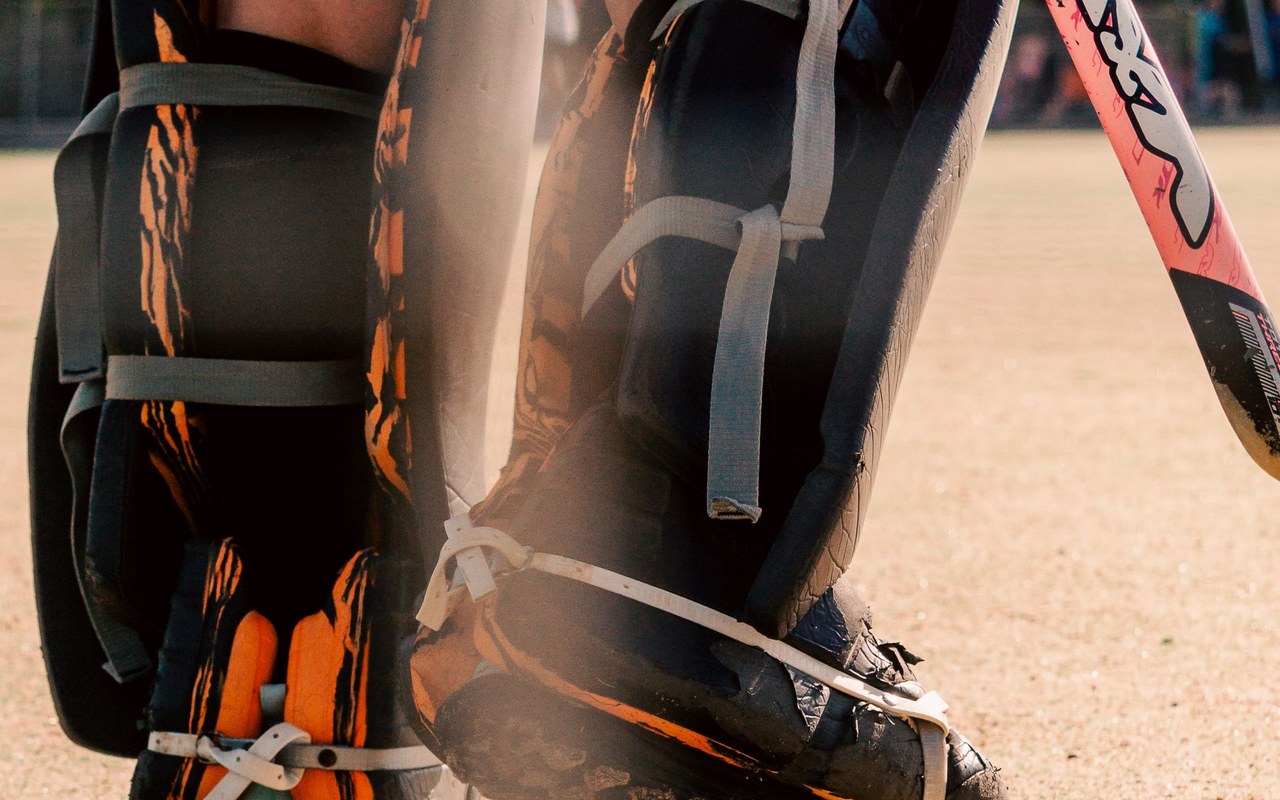
The requirements of the rules are the same indoors as outdoors: at least a helmet, leg guards and kickers, plus the permitted hand protectors, body, upper arm, elbow, forearm and thigh protectors. What a full kit consists of and in what order to buy it, we described in the post goalkeeping kit from scratch. You do not need a new set for indoors, but the way the same kit works does change.
- Kickers and leg guards – on a hard floor the goalkeeper slides and goes to ground more often, and the hard surface wears the foam faster than grass. Check the edges of the foam every few weeks.
- Shoes under kickers – turf shoes with studs slip on a wooden floor and damage it. You need indoor shoes with a flat sole that fit inside the kickers. We described the differences in the post turf or indoor shoes.
- Clothing under the protection – choose clothing under the pads to suit the hall temperature and the fit of the kit. Check during training that it does not restrict movement or bunch up under the straps.
- Velcro and straps – sweat and floor dust clog Velcro within a few sessions. Brush it clean after every tournament, because a strap that comes loose mid-move cannot be fixed on the run.
Goalkeeper warm-up for indoors
The warm-up is set by the coach, but for indoors the emphasis is usually on short reactions and low balls. Five drills to start the conversation with the coach:
- Footwork without a ball: short shuffle steps between the posts, stop, change of direction.
- Flat pushes from close range alternately into the left and right kicker, returning to the stance after each clearance.
- A ball passed along the board and played at goal from an angle: the goalkeeper resets to the new line of the shot instead of diving at the first one.
- Shots lifted in the circle after a flat pass, so the hands start working only when the ball actually goes up.
- Rebounds: shot, bounce off a pad and an immediate second shot, because indoors many goals come from close range after the first save.
Outdoor and indoor in one table
| What changes | Outdoors | Indoors |
|---|---|---|
| Goal | 3.66 × 2.14 m | 3 × 2 m |
| Shooting distance from the circle line | over 14 m | 9 m |
| Goalkeeper's playing area | own 23-metre area | own half |
| Typical shot | a hit, often from distance | a push or flick from close range, rebounds off the boards |
| Shoes under kickers | turf shoes | indoor shoes |
Kit check before the first tournament
- Helmet: straps and chin fastening hold, cage without dents, shell without cracks.
- Kickers and leg guards: foam without deep gouges, straps and buckles intact, Velcro clean and gripping along its full length.
- Hand protectors: the stick grip is not torn, the foam of the blocking hand is not worn through.
- Indoor shoes: tried on together with the kickers, because a new shoe model may not fit into an old kicker.
If the check showed a cracked helmet shell, worn-through kickers or Velcro that no longer holds, sort out the replacement before the first tournament, not after it. You will find the items of the kit in the category goalkeeping equipment.