

Blog
Push, flick, slap and hit – the basic plays and what in a stick makes them easier

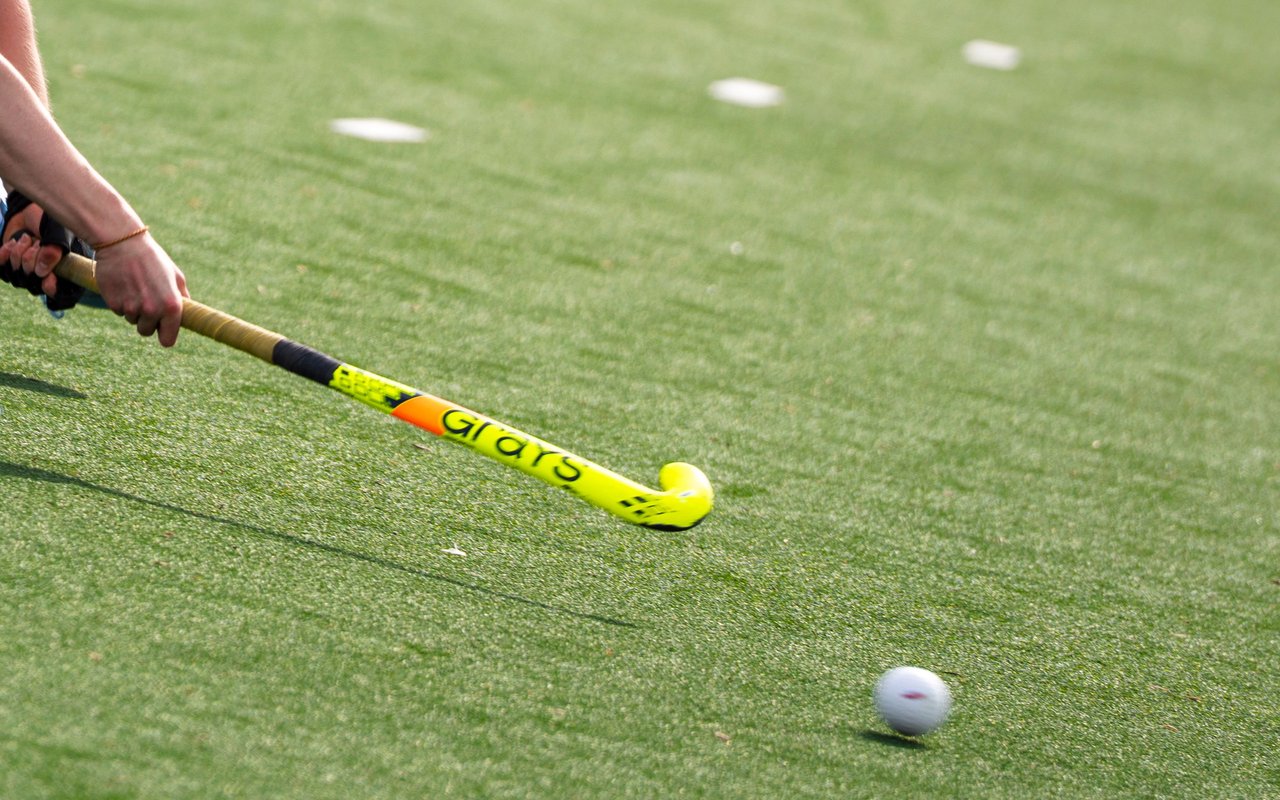
Push, flick, slap and hit are four ways of playing the ball that you hear on the pitch from the very first training sessions. In the glossary we described them in one sentence. Here we go further: how to hold the stick, where the ball sits, when to choose which play and what in the stick itself can make it easier. Treat stick specifications as tendencies, not guarantees. The same model behaves differently in the hands of two players, because the result depends above all on technique.
Push – a pass with no backswing
The FIH rules describe the push as moving the ball along the ground with a pushing movement after the stick has been placed in contact with or close to the ball. During the push, both the ball and the head of the stick are in contact with the ground. There is no backswing, so the opponent has little time to read the pass.
The left hand holds the top of the handle, the right hand goes lower, roughly to the bottom of the grip. Knees bent, body low, left shoulder pointing at the target. The ball starts by the back foot, and the stick carries it forward as body weight moves from the right foot to the left. At the end of the movement the stick head points at the target. The push works for short and medium passes, under pressure from an opponent and indoors, where the FIH rules of indoor hockey do not allow hitting.
What helps in the stick: a length suited to the player’s height. A stick that is too long can make it harder to get low, while one that is too short can require excessive bending.
Flick – a push that lifts the ball
Under the FIH rules a flick is a push after which the ball leaves the ground. The grip is similar to the push, but the ball sits closer to the front foot and the stick starts its movement just behind it. The head is slightly opened so it can get under the ball, and the body works low and moves its weight forward. The movement comes from the legs and trunk, not just the arms.
A flick is useful when you need to lift the ball over a defender's grounded stick, pass over a line of opponents or shoot high from close range. The FIH rules allow the ball to be raised with a flick as long as it is not dangerous, and they consider a flick towards an opponent within 5 metres to be dangerous.
What in the stick helps: the bow. A profile with the point of maximum bow closer to the head usually makes it easier to get under the ball, at the cost of harder receiving. We covered the details in the post on low, mid and standard stick bows. The drag flick is a separate penalty corner technique, with a long phase of carrying the ball along the ground, and it has its own post: the drag flick and the equipment that makes it easier.
Slap – a hit with a low backswing
The slap sits between the push and the full hit. The FIH rules describe it as a long pushing or sweeping movement of the stick before contact with the ball and regard it as a hit. The hands stay apart as when carrying the ball, the stick moves low, almost parallel to the ground, the backswing is short and flat, and the movement finishes close to the ground. Some players slap with their hands together at the top of the handle, with the ball in front of the left foot and their legs deeply bent.
A slap usually lets you play the ball harder than a push without changing your grip, so it suits longer passes along the ground and quick play straight after receiving. Since the rules regard it as a hit, the same restrictions apply: the ball must not be intentionally raised from a hit unless it is a shot at goal, and indoors the slap is prohibited just like the hit.
What in the stick helps: shaft stiffness. A stiffer stick, within one range usually the one with a higher carbon content, can transfer more energy to the ball with correct technique, but it is less forgiving when receiving. More in the post on stick materials and carbon content.
Hit – the full hit
For the hit, the hands are together at the top of the handle. The ball is roughly a stick's length from the body, between the middle and the front foot. Backswing no higher than shoulder height, contact with the flat side of the head, front leg bent for balance. Having the toe of the head pointing up at the moment of contact reduces the risk that an open head undercuts the ball and sends it into the air.
The hit is used for long passes, free hits and shots. The FIH rules prohibit hitting the ball hard on the forehand with the edge of the stick and intentionally raising the ball from a hit, except for a shot at goal. Raising the ball unintentionally from a hit is not an offence, as long as it is not dangerous. The rules also consider a ball dangerous if it forces an opponent to take evasive action.
What in the stick helps: stiffness and weight. At the same head speed a heavier stick carries more momentum, while a lighter one is easier to accelerate and returns more quickly to carrying the ball. Which compromise suits you depends on your position and playing style, not on the number of grams in the specification alone.
How to practise
Do drills with a raised ball and hard hitting while wearing shin guards and a mouthguard, under a coach's supervision, with clear space in the direction of play and never towards people.
- Pushing in pairs. Partners stand 5 metres apart, then 10. The ball should roll along the ground without bouncing, and the stick stays with it until the end of the movement.
- Flick over an obstacle. A stick lies on the ground a metre in front of the ball; flick over it into an empty goal or into a marked lane with no one in it. First from a standing position, then after a short carry.
- Slap and hit into an empty goal. A series of five plays from just outside the circle, alternating slap and hit, with no goalkeeper. The other players stand to the side, out of the line of play. Count how many balls reached the goal along the ground.
For technical training it helps to have several balls of the same type, so that every repetition behaves in a similar way. You can top up your supply in the balls category.