

Blog
Starter kit – what to buy before your first season and what can wait

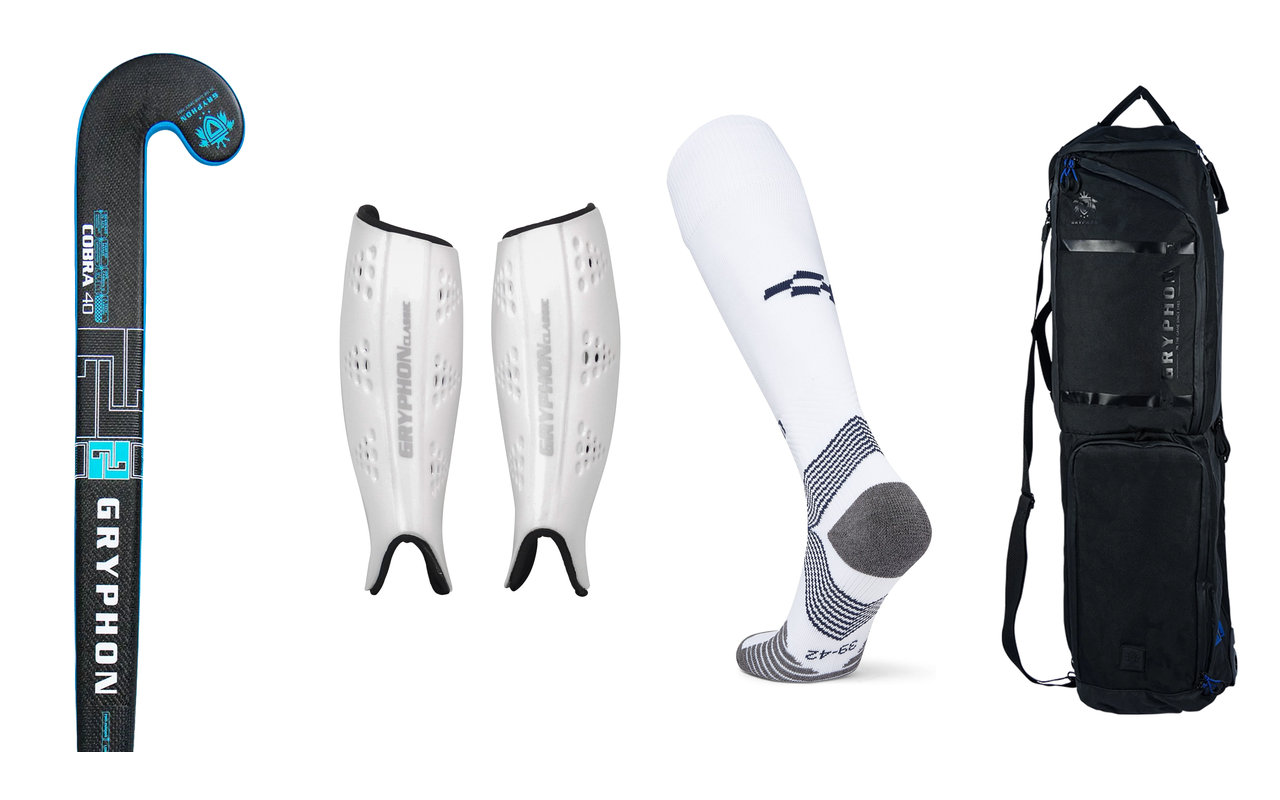
The first question from a parent, or from an adult who has just joined a club, is always the same: what do I have to buy straight away. The answer is shorter than you might think, because the list of things genuinely needed for the first training session fits into five points. The rest of the kit only makes sense once you know which position you will play, how often, and whether you are staying in the sport for the long run at all. Below is a split into three baskets: now, in a month, and someday.
Basket one: the basic kit for your first training session (check the requirements with your club)
- A stick sized to your height, not by the age on the birth certificate. A stick that is too long forces the back straight and spoils ball carrying from day one.
- Shinguards, because the ball and other players' sticks work right at ground level throughout the session.
- Mouthguard, always recommended, and in many clubs required at training sessions too, not only at matches.
- Shoes suited to the surface and the venue's requirements from the very first session: clean indoor shoes with a non-marking sole for the hall, footwear made for that type of surface for artificial turf. If you already have the right pair, this purchase can wait.
- Something to drink and a dry shirt to change into, the things nobody thinks about until they get cold after training.
That is enough to get started. Everything else can be bought at the pace at which commitment grows.
Stick: buy for now, not to grow into
The most common mistake at the first purchase is a stick one size too big, bought on the assumption that the child will grow into it. Field hockey is played bent forward with the hands low, so a stick that is too long puts the whole posture higher than it should be. Choosing the size takes two minutes and we described it in the table in the post how to choose stick length.
The second mistake is buying a stick with a high carbon content at the start, because that is what the national team players' kit looks like. Such a stick is stiff and less forgiving of an imprecise receive. To begin with, a construction with a higher share of fibreglass, which damps vibration, works better. We gathered the differences in materials in the post how much carbon do you need, and the effect of the stick's shape on your skills in the article on the stick bow.
Basket two: after a few weeks
Once it is clear that training is two or three times a week, it is time for things that improve comfort and safety but are not a requirement from day one.
- A glove for the left hand, useful especially where the ball travels low and close to the hands. When it makes sense and how to choose one is described in the post on the field player glove.
- Your own grip, because the factory one wears out over time, and its condition translates directly into the feel of the stick.
- A bag with a stick compartment, which puts an end to carrying kit in a school rucksack and the stick separately in your hand.
- Club socks and training clothing as a set for two sessions, so you do not have to wash after every session.
Basket three: only once you know how you play
There are purchases that, without a specific reason, are a waste of money, and with a reason become obvious. A second stick, a separate one for indoors, makes sense when you play both versions all year round. Your own mask for defending penalty corners makes sense when the coach regularly puts you in to defend corners; you must have protection the very first time you take on that role, but to begin with it can be a club mask. The same goes for the goalkeeper: they play in full protection from the first training session in that position, only in club kit, and put together their own set only once the position is settled, because it is the most expensive kit in the sport and the one most dependent on the player's size.
The same group includes accessories that look attractive in the shop and in practice lie in the bag: spare training balls make sense for individual work outside the club, not as an addition to the first kit.
Where it is worth spending more, and where it makes no difference
| Item | When to buy | Note when choosing |
|---|---|---|
| Stick | before the first training session | size by height, a forgiving construction |
| Shinguards | before the first training session | must stay on the leg without squeezing painfully |
| Mouthguard | before the first training session | moulding at home only if the manufacturer provides for it; check the club's requirements |
| Shoes | before the first training session, if you do not have the right pair | suited to the surface; for the hall clean, with a non-marking sole |
| Glove | after a few weeks | hand size matters more than the model |
| Bag | after a few weeks | stick compartment, sturdy zips |
| Second stick or your own mask | once you know how and where you play | buy for a specific role; club protection until then |
A child who is growing
With children the order is the same, only the horizon changes. The stick and shoes have to be treated as seasonal items, because a few centimetres of growth changes the size. Protective gear lasts longer, as long as it has not become too tight. A simple rule works best: try on the whole kit once every six months, instead of making decisions two days before a tournament.
It is also worth agreeing with the coach whether the club lends equipment for the first weeks. Many sections keep a stock of sticks for new players, which means the first stick of your own can be bought knowingly, after a few sessions.
If you are at the stage of your first purchase, start with the most important item and choose it without rushing. You will find models for beginners and for advanced players in the category field hockey sticks.