

Blog
Positions in field hockey – who is responsible for what

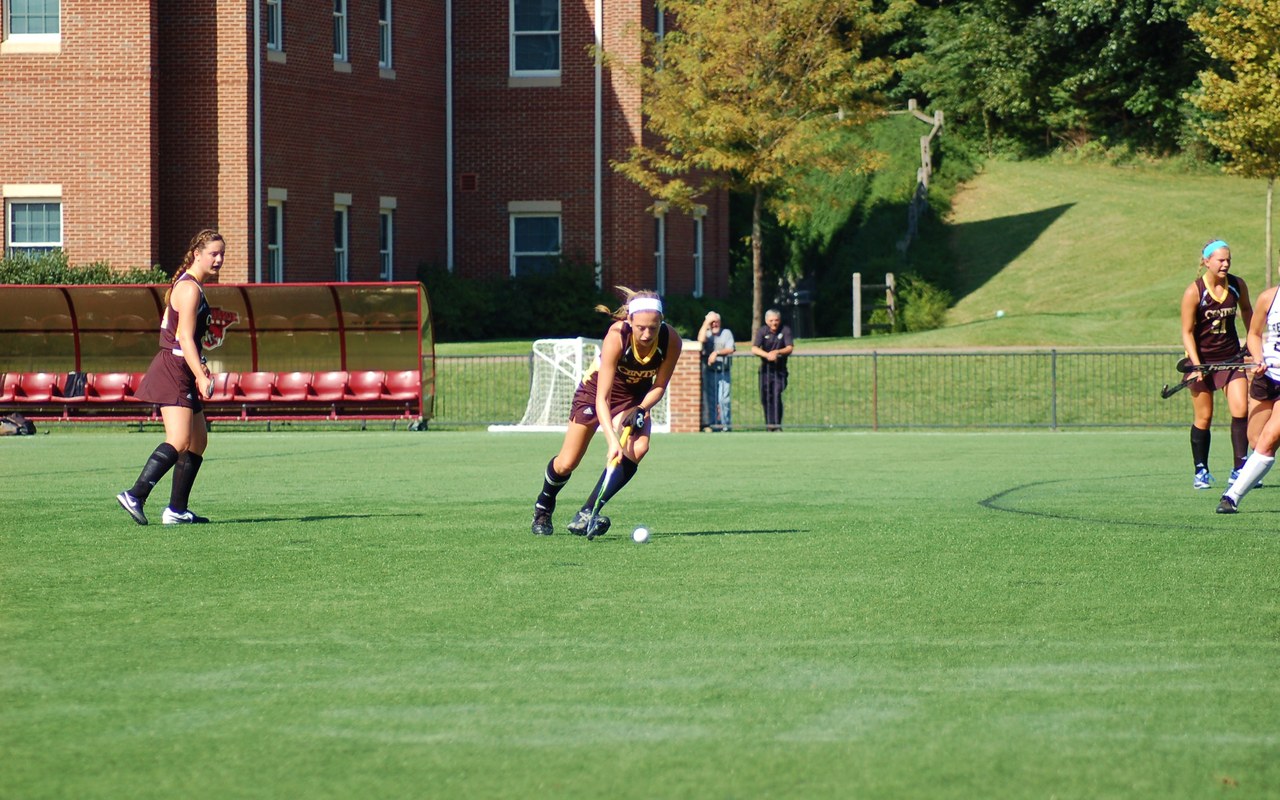
A parent at their first match sees eleven people chasing a ball. A coach sees three lines that move together and a goalkeeper who conducts them. This article sorts out the names of the positions in field hockey, the jobs each one has, and what a role on the pitch really means for equipment as opposed to what is merely received wisdom.
What comes from the rules and what from the coach
The FIH rules (Rules of Hockey 2026) say very little about positions. A team has no more than eleven players on the pitch (rule 2.1) and plays either with a goalkeeper in protective equipment or with field players only (rule 2.2). Substitutions may be made any number of times, except between the award of a penalty corner and its completion (rule 2.3). The rules contain no offside rule. The split into defenders, midfielders and forwards, the names of formations and the scope of each job are the coach's decisions, and they differ from club to club.
Positions at a glance
| Playing Position | Main jobs | What helps |
|---|---|---|
| Goalkeeper | saving shots, clearing the ball from the circle, organising the defence by voice | reflexes, courage, loud communication |
| Centre back | cover, tackling, the first pass after winning the ball | reading the game, a reliable long pass |
| Full back | marking the winger, carrying the ball out down the side | one-on-one play, stamina |
| Centre midfielder | linking defence and attack, switching the play | receiving on the move, reliable forehand and reverse-stick play (using the flat face, including with the stick turned over) |
| Wide midfielder | supporting the attack down the wing and tracking back | speed, an accurate cross along the ground |
| Forward | pressing, play in the circle, rebounds, winning penalty corners | quick finishing, playing with your back to goal |
Goalkeeper
This is the only position described explicitly in the rules. The goalkeeper wears a shirt of a different colour and at least headgear, leg guards and kickers (rule 4.4). Inside the circle they are defending, provided they have their stick in their hand, they may use the stick and body to deflect the ball over the back-line or play it in any other direction. They must not take part in play outside the 23-metres area they are defending, except when taking a penalty stroke (rules 10.1 and 10.2). They see the whole pitch, which is why they organise the defence by voice: who marks, who goes to the ball, where the free opponent is. We explained how to put the kit together in our post goalkeeping kit from scratch.
Defenders
The centre back plays closest to their own goal. They cover team-mates, cut out passes towards the circle and start the attack after winning the ball, often with a long pass over half the pitch. Full backs look after the opposing wingers and, when their team has the ball, push high and provide width. Defenders are also responsible for defending penalty corners: one runs out to the shooter while the others close down the passing lines and the posts. One simple principle applies to tackling: go for the ball with the stick, not the body. Rule 9.13 allows a tackle only from a position in which the ball can be played without body contact.
Midfielders
Midfielders link defence and attack and are close to the ball in both phases of play. The centre midfielder shows for the ball between the opponent's lines, receives it on the move and switches play to the other side. The defensive midfielder sits in front of the defenders and closes the middle, while the wide midfielders work the full length of the pitch. A confident reverse-stick game is useful here, because the ball arrives from every direction.
Forwards
A forward starts the whole team's defending: their press is meant to steer the opponent's build-up towards one side of the pitch. In attack they play mainly in and around the circle. What counts is a tight first touch, a quick shot and rebounds after the goalkeeper's save. A goal can only be scored after an attacker plays the ball inside the circle (rule 8.1), so a forward who cannot see a route to goal often looks for a defender's foot and a penalty corner. Wingers stay close to the side-line to stretch the defence and deliver flat balls into the goalmouth.
Formations and rotation
A formation is written in numbers from defence to attack, without the goalkeeper: 4-3-3 means four defenders, three midfielders and three forwards. You will also see versions with three defenders or with a lone high forward. These are conventional starting shapes, not a rule. Because substitutions are rolling and unlimited, players often come off after a few minutes of play, and the same player may be a full back and a midfielder in one match.
In children's groups it makes sense to rotate positions, including the goalkeeper. A child who plays every position over several seasons learns tackling, passing and shooting, and specialisation comes later, together with the coach's decision.
Roles at a penalty corner
- Injector – plays the ball from the back-line to team-mates at the top of the circle; what counts is a repeatable, fast and flat pass.
- Stopper – stops the ball outside the circle and sets it up for the shooter.
- Shooter – takes the shot, most often with a drag flick or a hit.
- First runner – the defender who runs at the shooter and closes down the angle.
- Post defenders – stay closer to the goal and look after rebounds and passes out wide.
We described the shooting technique in our post drag flick.
Does position decide your equipment
For the goalkeeper it does, because their equipment is defined by the rules. For field players the role on the pitch is only one of the pointers; the techniques you perform most often and how the stick feels in your hands matter more. A defender who hits a lot and passes over long distances may look for a different profile from a forward who mainly makes tight receptions and close-range shots, but a “defender's” or “forward's” label is no substitute for checking the bow profile and stiffness of a specific model. We explain what the profile means in our post stick bow.
One difference is practical: players who defend penalty corners will benefit from having their own face mask, because rule 4.2 recommends one in exactly that situation, while competition regulations may make it mandatory. At all FIH events every player defending a penalty corner must wear one. Rule 4.2 also permits hand protection. We write about gloves in our post field glove.
How to choose a position to start with
- Ask the coach where they see your strengths, and ask for a trial in two different positions.
- At matches, watch one player in your chosen position, not the ball.
- Do not judge a position by the number of goals; defenders and midfielders contribute to the result differently from forwards.
- If you are drawn to the goal, try it at training in the club's kit before you buy your own.
You will find sticks for every position in our category Hockey Sticks, goalkeeper equipment in our category Goalkeeping, and masks and shin guards in our category Protection.
Photo: fh.mum1, CC BY 2.0 licence, Wikimedia Commons; cropped.