

Blog
Indoor ball vs outdoor ball – how they differ and how it changes the game

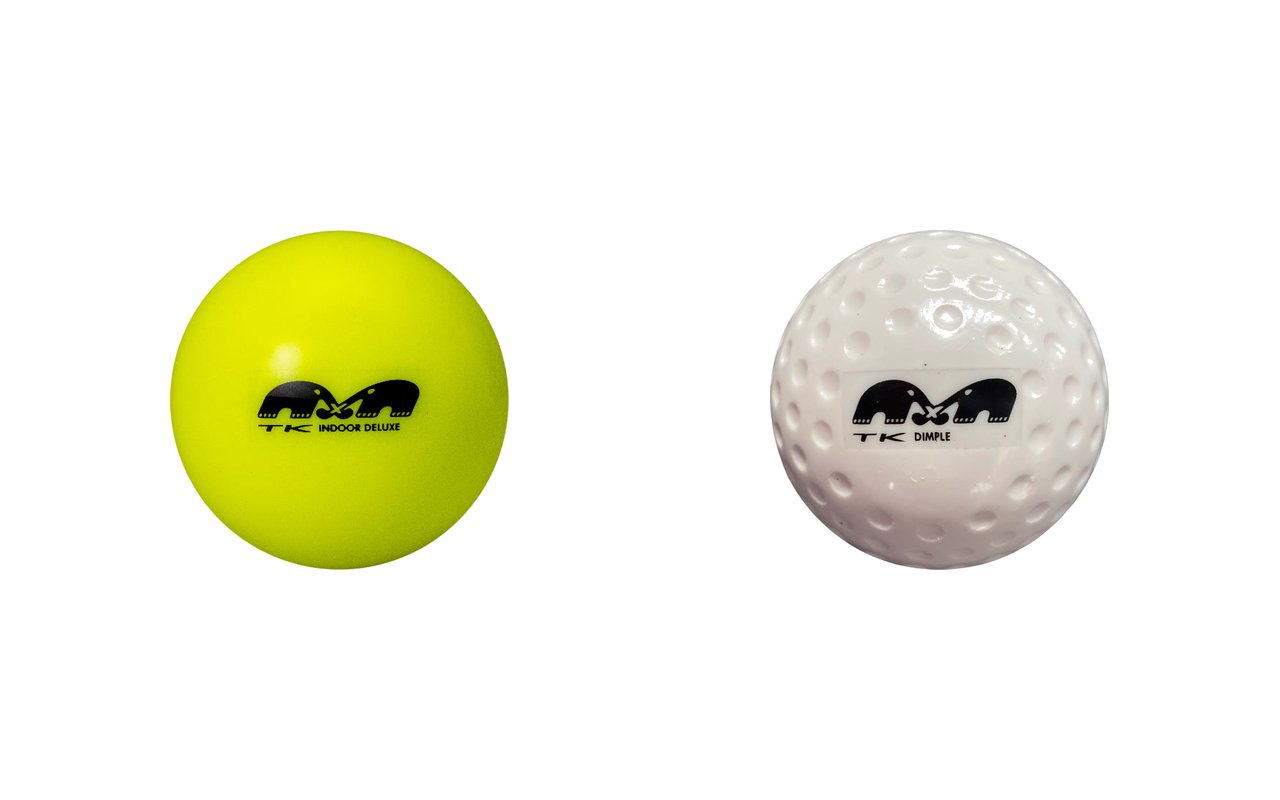
Before the indoor season, balls labelled “indoor” turn up in club ball bags and the question comes back whether you need different balls for indoor than for outdoor. The answer has two parts. Under the FIH rules the ball specification is the same in both forms of the game, to the millimetre and the gram. What differs is what you are allowed to do with the ball, and that changes the game more than the ball itself. We wrote about training and match balls, dimples and colours in general in the post on training ball or match ball. Here we focus on the difference between outdoor and indoor.
What the FIH rules say about the ball
We checked the ball specification in four editions of the FIH rules: for outdoor hockey in the edition effective from 1 March 2026 and the edition from 1 November 2026, and for indoor hockey in the 2023 edition and the edition from 1 November 2026. The wording is identical in all four.
| Parameter | Outdoor | Indoor |
|---|---|---|
| Shape | spherical | spherical |
| Circumference | 224–235 mm | 224–235 mm |
| Weight | 156–163 g | 156–163 g |
| Material | any | any |
| Colour | white or an agreed colour which contrasts with the playing surface | white or an agreed colour which contrasts with the playing surface |
| Surface | hard and smooth, indentations permitted | hard and smooth, indentations permitted |
The new editions apply in international competitions from 1 November 2026, and the date of their adoption domestically is set by the national association. The change of edition makes no difference to the ball specification, so a ball that complies with the rules outdoors meets the same requirements indoors, and vice versa.
So where does the “indoor ball” come from
The split into indoor balls and outdoor balls is a manufacturers’ label, not a class in the rules. A manufacturer describes a model as indoor because it designed it with indoor play in mind, but its dimensions and weight must fall within the same ranges. Nor do the rules settle the “smooth or dimpled” debate: they permit both finishes in both forms of the game. What the construction differences between particular models are is stated in the description of that model, not in the rules.
One provision carries particular weight indoors: colour. The ball must be white or an agreed colour which contrasts with the playing surface. Sports hall floors come in different colours and carry lines for other sports, so the colour of the match ball depends on what the organiser decides. Before a tournament, check the regulations of the competition in question, because the organiser may also specify a particular ball model.
Same ball, different rules of play
The difference between outdoor and indoor comes from the rules on playing the ball. The key provisions of both forms in the current FIH editions:
- Hit. Outdoors, hitting is permitted. Indoors, the rules prohibit hitting the ball; the game is played with pushes and flicks.
- Raising the ball. Outdoors, the ball must not be intentionally raised from a hit, except for a shot at goal, but raising it with a flick or scoop is permitted provided it is not dangerous. Indoors, the ball must not be raised off the floor, except for a shot at goal.
- Indoor margin. It is not an offence if the ball rises unintentionally by less than 100 mm, unless an opponent is within playing distance.
- Ball in the air indoors. Under the 2023 edition, it may be stopped by the team that did not raise it; after a legitimate shot rebounds off the goalkeeper, a defender, the post or the crossbar, either team may stop it. The edition from 1 November 2026 allows players to stop it and press it down to the floor with the flat side of the stick.
A full overview of the rule differences, including the boards and the penalty corner, is in the post on indoor hockey rules.
What it changes in the game
Since the ball has to stay on the floor except for a shot at goal, indoors almost the whole game is carrying, pushing and receiving a ball rolling along the floor. Outdoors there are also hits and aerial passes; indoors these plays do not exist. For a player this means more touches on the ball right at floor level and less room for error when receiving, because an uncontrolled bounce of the ball can break the rule on raising it.
The surface is different too. The same ball rolls differently on artificial turf than on a hall floor, and your hands need to get used to that after the change of season. A stick suited to indoor play helps here: we explain how an indoor stick differs from an outdoor one in the guide on indoor stick vs outdoor stick.
FIH requires a hard ball in both forms of the game, but does not specify a single, identical hardness for every model. A shot at goal can raise it indoors too. The required protective equipment is set by the rules and the regulations of the competition in question.
How to choose balls for the indoor season
- Compliance with the rules. Weight 156–163 g and circumference 224–235 mm, the same as outdoors. You will find these figures in the model description.
- Organiser’s requirements. For matches, check the regulations of the competition in question, including the colour and any specified model.
- Colour for your particular hall. For training, choose a colour that stands out well against the floor you play on.
- Several balls of the same model. Use the same ball model to compare repetitions with similar equipment.
- Indoor-labelled ball or not. The rules do not require a separate ball for indoor. If a manufacturer labels a model as indoor, the description of that model states what it was intended for.
Alongside outdoor balls, our ball category also includes an indoor-labelled model, the TK Indoor Deluxe Ball. You will find all models, with descriptions and availability, in the category hockey balls in our shop.